

Tomato and pepper production faces emerging threats
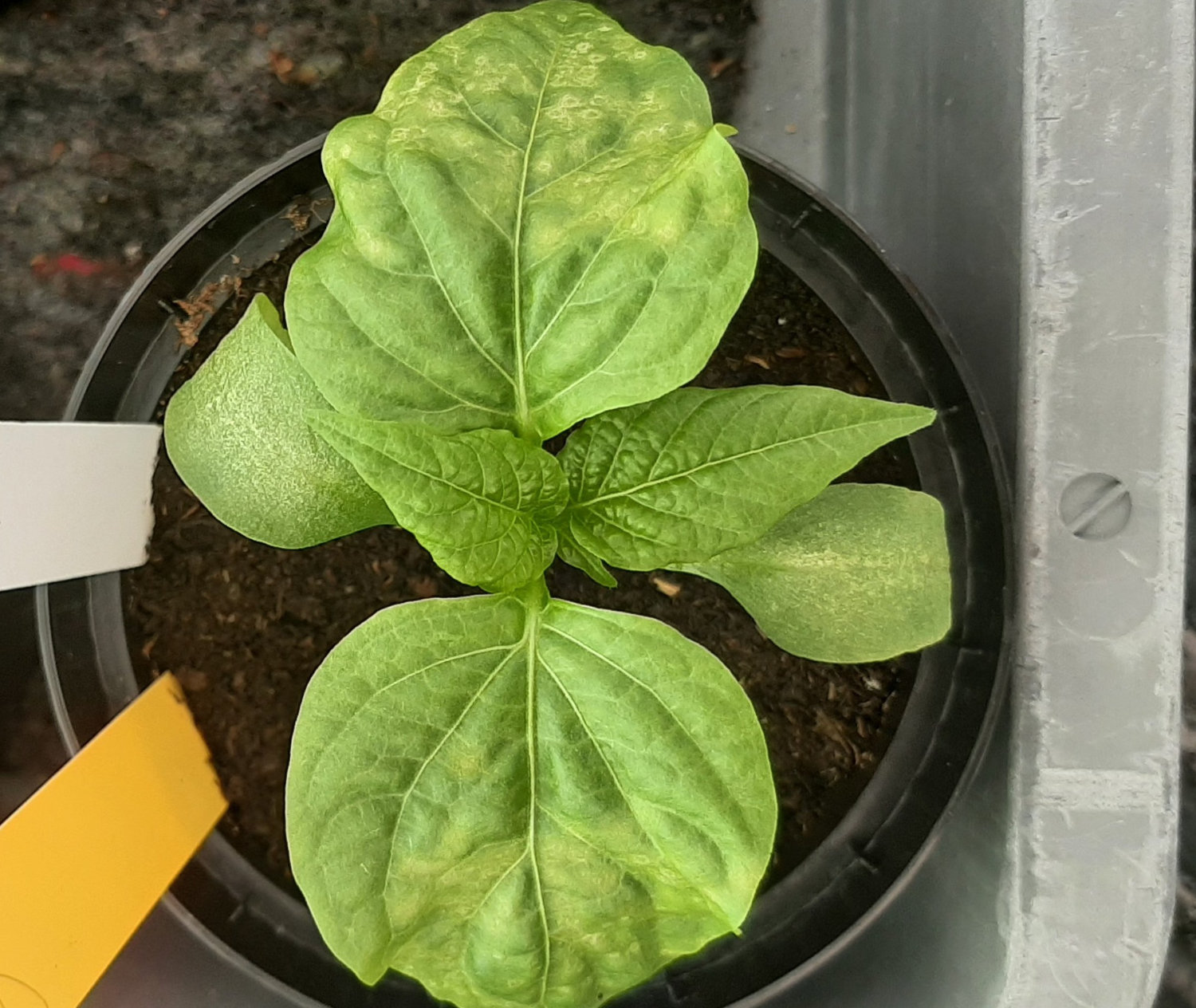
Leaf ringspots symptom caused by tomato spotted wilt virus on pepper source: DSMZ
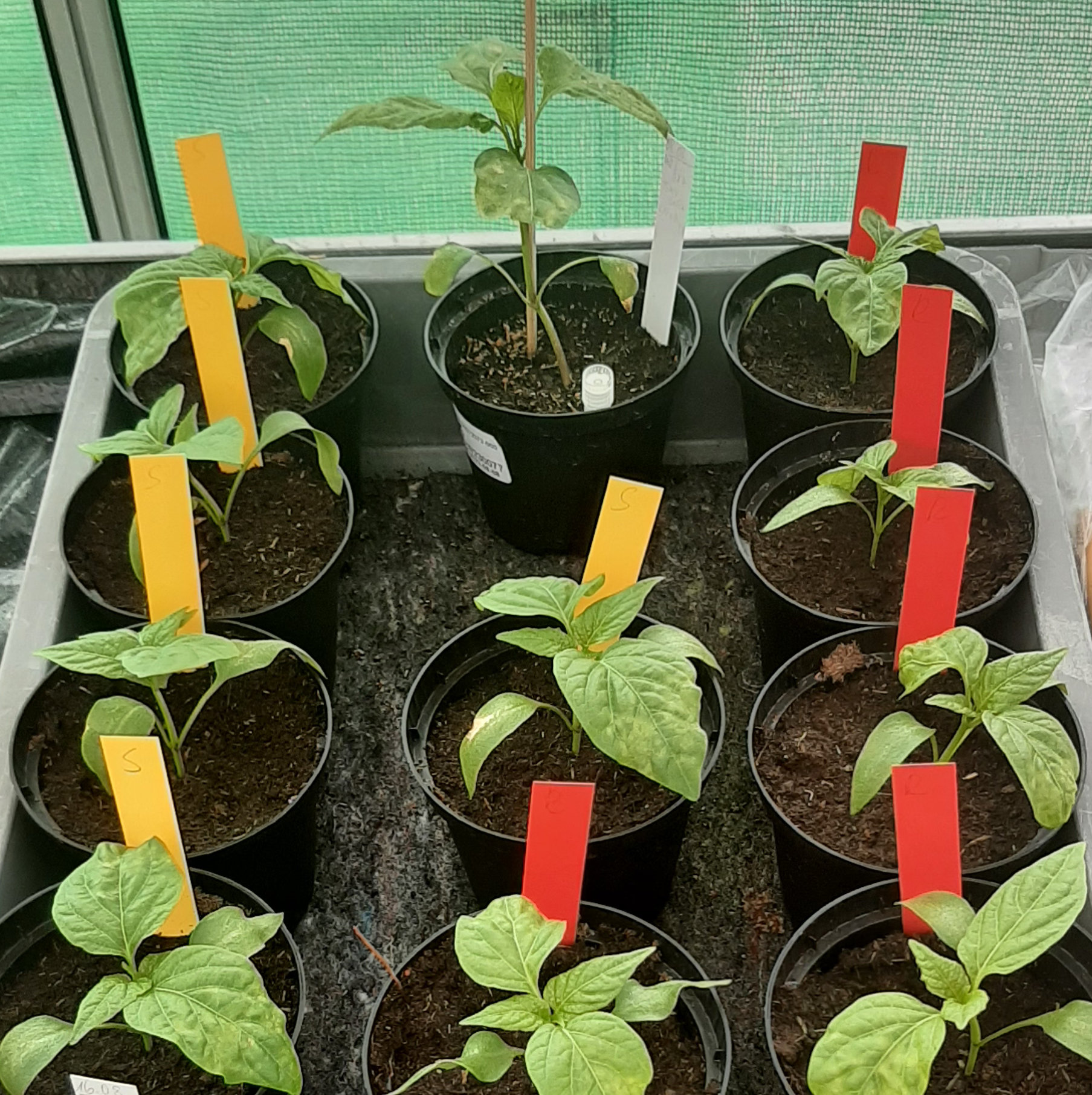
Biological assay to assess the resistance-breaking potential of tomato spotted wilt virus strains in pepper genotypes source: DSMZ

Dr. Paolo Margaria, leader of the group Discovery and Diversity at the Plant Virus Department at DSMZ
DSMZ: Novel virus strains overcome key crop resistance genes
BRAUNSCHWEIG, LOWER SAXONY AREA, GERMANY, March 4, 2026 /EINPresswire.com/ -- A research team composed of plant virologists from the Plant Virus Department at Leibniz Institute DSMZ-German Collection of Microorganisms and Cell Cultures, the Italian National Research Council and BASF-Nunhems Italy, has recently published the findings of a scientific collaboration on investigating the occurrence of resistance-breaking strains of tomato spotted wilt virus (TSWV) in tomato and pepper fields. The results, which prove for the first time the emergence of double resistance-breaking strains (D-RB) of TSWV in agricultural settings, have been published in the internationally renowned scientific journal Virology.
A novel scenario in agriculture
The study highlights an emerging risk in the management of tomato spotted wilt virus, one of the most devastating plant viruses, given its ability to infect a large number of ornamental and vegetable crops worldwide, including tomato and pepper. Upon infection, the crop yield is reduced, and in severe outbreaks, entire fields suffer substantial economic losses. Traditionally, the most effective strategy to limit TSWV has combined the use of resistant cultivars with control of insect vectors. This study reports a new scenario occurring in the field. “Because resistance to TSWV in tomato and pepper is based on different genes, alternating cultivation of tomato and pepper varieties has long been considered a safe and sustainable strategy to reduce the risk of outbreaks associated to the emergence of resistance-breaking virus strains. Our study reports a novel scenario, where TSWV strains capable of overcoming resistance in both crops have been identified”, summarises Dr. Paolo Margaria, leader of the group Discovery and Diversity at the Plant Virus Department at DSMZ.
Impact of research findings on agronomic practices and disease management strategies
The study highlights that certain agronomic practices, including the alternation of resistant cultivars or cultivating resistant tomato and pepper crops in close proximity, may unintentionally favor the selection and spread of these more aggressive virus variants. This scenario has already occurred in Italy, and may apply to other areas globally. “Our findings open new perspectives for production systems in which tomato and pepper are cultivated in close proximity, and call for a reassessment of current agronomic practices and disease management strategies. In particular, we recommend systematic screening for D-RB strains of TSWV wherever the two crops are grown near to each other. Monitoring and adapted management approaches will be essential to reduce the risk, spread, and impact of these novel virus strains and preserve crops production”, concludes Paolo Margaria. Of interest, in the context of the study, the accurate molecular characterization of genome sequences of the D-RB strains evidenced the occurrence of an amino acid residue in the movement protein that allows the virus to break the resistance and had been so far not revealed in Italian settings. Overall, the research results provide a significant, valuable resource for studying resistance mechanisms and plant responses in crops of major relevance.
Original publication
Forgia, M.a, Margaria, P.a, Mammella, M., & Ciuffo, M. (2026). Characterization of Italian resistance-breaking isolates of tomato spotted wilt virus reveals double resistance-breaking strains in tomato and pepper and new insights into the occurrence of the recently reported D122G substitution in the NSm protein. Virology, 110820. aequal contribution
https://doi.org/10.1016/j.virol.2026.110820
Press contact
PhDr. Sven-David Müller, Head of Public Relations, Leibniz Institute DSMZ-German Collection of Microorganisms and Cell Cultures GmbH
Phone: ++49 (0)531/2616-300
Mail: press@dsmz.de
About the Leibniz Institute DSMZ
The Leibniz Institute DSMZ-German Collection of Microorganisms and Cell Cultures is the world's most diverse collection of biological resources (bacteria, archaea, protists, yeasts, fungi, bacteriophages, plant viruses, genomic bacterial DNA as well as human and animal cell lines). Microorganisms and cell cultures are collected, investigated and archived at the DSMZ. As an institution of the Leibniz Association, the DSMZ with its extensive scientific services and biological resources has been a global partner for research, science and industry since 1969. The DSMZ was the first registered collection in Europe (Regulation (EU) No. 511/2014) and is certified according to the quality standard ISO 9001:2015. As a patent depository, it offers the only possibility in Germany to deposit biological material in accordance with the requirements of the Budapest Treaty. In addition to scientific services, research is the second pillar of the DSMZ. The institute, located on the Science Campus Braunschweig-Süd, accommodates more than 93,600 bioresources and has around 210 employees. www.dsmz.de
The Leibniz Association
The Leibniz Association connects 96 independent research institutions that range in focus from natural, engineering and environmental sciences to economics, spatial and social sciences and the humanities. Leibniz Institutes address issues of social, economic and ecological relevance. They conduct basic and applied research, including in the interdisciplinary Leibniz Research Alliances, maintain scientific infrastructure, and provide research-based services. The Leibniz Association identifies focus areas for knowledge transfer, particularly with the Leibniz research museums. It advises and informs policymakers, science, industry and the general public. Leibniz institutions collaborate intensively with universities – including in the form of Leibniz ScienceCampi – as well as with industry and other partners at home and abroad. They are subject to a transparent, independent evaluation procedure. Because of their importance for the country as a whole, the Leibniz Association Institutes are funded jointly by Germany’s central and regional governments. The Leibniz Institutes employ around 21,400 people, including 12,170 researchers. The financial volume amounts to 2,3 billion euros. www.leibniz-gemeinschaft.de
PhDr. Sven David Mueller, M.Sc.
Leibniz-Institut DSMZ
+49 531 2616300
email us here
Visit us on social media:
LinkedIn
Bluesky
Instagram
Facebook
YouTube
X
Other
Legal Disclaimer:
EIN Presswire provides this news content "as is" without warranty of any kind. We do not accept any responsibility or liability for the accuracy, content, images, videos, licenses, completeness, legality, or reliability of the information contained in this article. If you have any complaints or copyright issues related to this article, kindly contact the author above.
