

Your daily news update on Asia and the Pacific
Provided by AGP
MDF Board Manufacturing Plant Setup, Feasibility Study, ROI Analysis and Business Plan Consultant
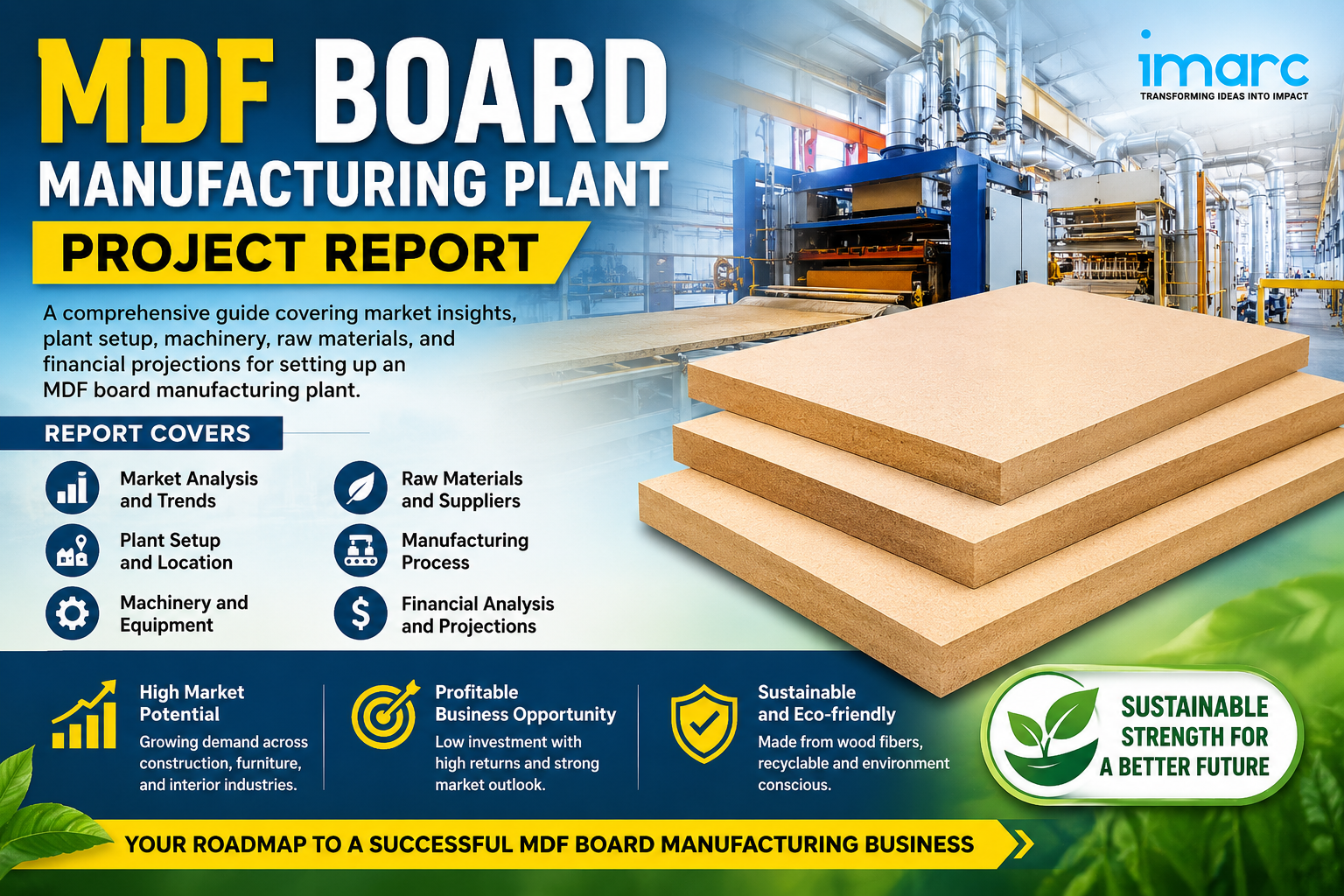
MDF Board Manufacturing Plant Cost
A Detailed DPR Covering CapEx, OpEx, Refining and Hot Press, ROI & the Global Opportunity in Furniture, Interior Design and Construction-Grade MDF Manufacturing
BROOKLYN, NY, UNITED STATES, May 19, 2026 /EINPresswire.com/ -- Setting up an MDF board manufacturing plant positions you in the fastest-growing segment of the engineered wood industry. Medium-density fiberboard is displacing plywood and solid wood across furniture, cabinetry, interior design, and construction because it is 30–35% cheaper, easier to machine, and free of the knots, grain variation, and surface inconsistency that plague natural timber. Global demand is structural and broadening - every new apartment, every fitted kitchen, every modular wardrobe, and every office interior is a buyer. In India, the MDF-to-plywood ratio is currently 20:80 against a global norm of 70:30, meaning the market is at the beginning of a multi-decade substitution cycle that is just now accelerating.IMARC Group’s MDF Board Manufacturing Plant Project Report is a complete DPR and MDF manufacturing feasibility study for investors, wood product manufacturers, and project developers. It covers the full medium density fiberboard manufacturing plant setup - from wood chip preparation through defibration, resin blending, mat forming, hot pressing, sanding, and cutting - with complete MDF board plant CapEx and OpEx modelling and 10-year financial projections.
𝗥𝗲𝗾𝘂𝗲𝘀𝘁 𝗳𝗼𝗿 𝗮 𝗦𝗮𝗺𝗽𝗹𝗲 𝗥𝗲𝗽𝗼𝗿𝘁: https://www.imarcgroup.com/mdf-board-manufacturing-plant-project-report/requestsample
𝐈𝐧𝐯𝐞𝐬𝐭𝐦𝐞𝐧𝐭 𝐃𝐫𝐢𝐯𝐞𝐫𝐬 𝐚𝐧𝐝 𝐌𝐚𝐫𝐤𝐞𝐭 𝐎𝐩𝐩𝐨𝐫𝐭𝐮𝐧𝐢𝐭𝐲
Three demand forces are simultaneously expanding the market for MDF board manufacturing:
𝐅𝐮𝐫𝐧𝐢𝐭𝐮𝐫𝐞 𝐟𝐨𝐫𝐦𝐚𝐥𝐢𝐬𝐚𝐭𝐢𝐨𝐧 𝐝𝐫𝐢𝐯𝐢𝐧𝐠 𝐞𝐧𝐠𝐢𝐧𝐞𝐞𝐫𝐞𝐝 𝐰𝐨𝐨𝐝 𝐬𝐮𝐛𝐬𝐭𝐢𝐭𝐮𝐭𝐢𝐨𝐧: India’s furniture market is estimated at USD 25–30 billion and growing at 12% CAGR. As organised retail expands and consumers shift from unbranded carpenter-made furniture to branded modular products, MDF adoption accelerates. Branded furniture manufacturers - from IKEA to HomeLane to Livspace- specify MDF for cabinet carcasses, drawer fronts, and decorative panels because it machines, finishes, and paints more uniformly than plywood at lower cost. Globally, the MDF:plywood ratio is 70:30. In India it is 20:80. The convergence toward global norms over the next decade will create demand growth that installed capacity cannot easily match.
𝐑𝐞𝐚𝐥 𝐞𝐬𝐭𝐚𝐭𝐞 𝐛𝐨𝐨𝐦 𝐜𝐫𝐞𝐚𝐭𝐢𝐧𝐠 𝐬𝐭𝐫𝐮𝐜𝐭𝐮𝐫𝐚𝐥 𝐛𝐚𝐬𝐞𝐥𝐨𝐚𝐝 𝐝𝐞𝐦𝐚𝐧𝐝: PMAY has sanctioned 37.9 million homes with over 26.9 million already completed, releasing a wave of first-time homeowners who allocate 8–12% of their housing budget to furniture and interiors. Urban India has a housing shortage of approximately 10 million units. Commercial real estate- offices, retail, hotels, and healthcare facilities - adds further demand for MDF-based interior fit-outs and wall panelling. Every new residential or commercial interior is a direct purchase event for MDF.
𝐁𝐈𝐒 𝐪𝐮𝐚𝐥𝐢𝐭𝐲 𝐦𝐚𝐧𝐝𝐚𝐭𝐞𝐬 𝐚𝐜𝐜𝐞𝐥𝐞𝐫𝐚𝐭𝐢𝐧𝐠 𝐢𝐧𝐝𝐮𝐬𝐭𝐫𝐲 𝐜𝐨𝐧𝐬𝐨𝐥𝐢𝐝𝐚𝐭𝐢𝐨𝐧: In January 2025, the Indian government implemented mandatory Quality Control Orders (QCO) for plywood and MDF boards, requiring BIS certification for all manufactured and imported panels. This eliminates non-compliant mills and import arbitrage. Certified manufacturers gain access to government projects, large-format retail chains, and institutional buyers who now legally require compliant material. New entrants who invest in compliant engineered wood board manufacturing plant infrastructure from day one capture share as the non-compliant fringe exits.
𝐌𝐃𝐅 𝐁𝐨𝐚𝐫𝐝 𝐓𝐲𝐩𝐞𝐬 𝐚𝐧𝐝 𝐏𝐫𝐨𝐝𝐮𝐜𝐭 𝐑𝐚𝐧𝐠𝐞
An MDF board production plant’s product range determines its end markets, customer base, and margin profile:
• 𝐒𝐭𝐚𝐧𝐝𝐚𝐫𝐝 𝐫𝐚𝐰 𝐌𝐃𝐅: Plain board supplied to furniture manufacturers, modular kitchen fabricators, and joineries for cutting, routing, and finishing. Thickness range 3–25 mm. The core volume product. Available in E1 and E2 formaldehyde emission classes.
• 𝐌𝐨𝐢𝐬𝐭𝐮𝐫𝐞-𝐫𝐞𝐬𝐢𝐬𝐭𝐚𝐧𝐭 (𝐌𝐑) 𝐌𝐃𝐅: Green-tinted boards with moisture-resistant resins for use in kitchens, bathrooms, and humid-climate applications. Commands a premium over standard MDF. Growing segment as modular kitchen adoption increases in urban India.
• 𝐅𝐢𝐫𝐞-𝐫𝐞𝐭𝐚𝐫𝐝𝐚𝐧𝐭 𝐌𝐃𝐅: FR-treated boards for commercial interiors, hospitality, and public buildings where fire safety codes apply. Regulatory compliance in hotels, offices, and government buildings drives institutional demand.
• 𝐓𝐡𝐢𝐧 𝐌𝐃𝐅 (2–6 𝐦𝐦): Used for cabinet backing panels, decorative cladding, and laminated surface applications. High volume-to-value ratio. An MDF board plant with thin-board capability serves both furniture manufacturers and decorative panel converters.
• 𝐏𝐫𝐞-𝐥𝐚𝐦𝐢𝐧𝐚𝐭𝐞𝐝 𝐌𝐃𝐅: Boards with factory-applied decorative laminate or paper foil surface. Ready for use without further finishing. Growing demand from small furniture workshops that lack their own lamination capability.
• 𝐄𝐱𝐩𝐨𝐫𝐭-𝐠𝐫𝐚𝐝𝐞 𝐥𝐨𝐰-𝐞𝐦𝐢𝐬𝐬𝐢𝐨𝐧 𝐌𝐃𝐅 (𝐄0/𝐂𝐀𝐑𝐁 𝐏𝐡𝐚𝐬𝐞 2): Formaldehyde emissions at or below 0.05 ppm. Required for export to EU and US markets. Premium pricing of 25–30% over standard domestic grades. Enables manufacturers to serve both domestic and international buyers from the same production line.
𝐌𝐃𝐅 𝐁𝐨𝐚𝐫𝐝 𝐌𝐚𝐧𝐮𝐟𝐚𝐜𝐭𝐮𝐫𝐢𝐧𝐠 𝐏𝐥𝐚𝐧𝐭 𝐅𝐞𝐚𝐬𝐢𝐛𝐢𝐥𝐢𝐭𝐲 𝐑𝐞𝐩𝐨𝐫𝐭: https://www.imarcgroup.com/mdf-board-manufacturing-plant-project-report
𝐇𝐨𝐰 𝐚𝐧 𝐌𝐃𝐅 𝐁𝐨𝐚𝐫𝐝 𝐌𝐚𝐧𝐮𝐟𝐚𝐜𝐭𝐮𝐫𝐢𝐧𝐠 𝐏𝐥𝐚𝐧𝐭 𝐖𝐨𝐫𝐤𝐬 - 𝐓𝐡𝐞 𝐑𝐞𝐟𝐢𝐧𝐢𝐧𝐠 𝐚𝐧𝐝 𝐇𝐨𝐭 𝐏𝐫𝐞𝐬𝐬 𝐏𝐫𝐨𝐜𝐞𝐬𝐬
MDF manufacturing is a continuous, thermally intensive process. Wood fibre and resin are transformed into a dense, uniform panel through a sequence of mechanical and thermal operations:
• 𝐖𝐨𝐨𝐝 𝐜𝐡𝐢𝐩 𝐩𝐫𝐞𝐩𝐚𝐫𝐚𝐭𝐢𝐨𝐧: Logs, wood residues, eucalyptus, or agro-residues are chipped to a uniform size. Chips are washed, screened, and pre-steamed to soften lignin bonds. Chip quality and species composition directly affect fibre quality and final board properties
• 𝐓𝐡𝐞𝐫𝐦𝐨-𝐦𝐞𝐜𝐡𝐚𝐧𝐢𝐜𝐚𝐥 𝐝𝐞𝐟𝐢𝐛𝐫𝐚𝐭𝐢𝐨𝐧 (𝐫𝐞𝐟𝐢𝐧𝐢𝐧𝐠): Pre-steamed chips enter a pressurised refiner at 160–180°C. Counter-rotating refiner discs separate the chips into individual fibres. Refiner plate gap and steam pressure control fibre length, freeness, and surface area- the primary determinants of board density and strength
• 𝐑𝐞𝐬𝐢𝐧 𝐚𝐧𝐝 𝐰𝐚𝐱 𝐛𝐥𝐞𝐧𝐝𝐢𝐧𝐠: Urea-formaldehyde (UF) resin, paraffin wax (for moisture resistance), and hardener are blended into the fibre stream. Resin content is typically 8–12% by fibre weight. MDI resin is used for low-emission and export-grade MDF board manufacturing unit cost is higher but opens premium markets
• 𝐃𝐫𝐲𝐢𝐧𝐠: Resin-blended fibres pass through a flash tube dryer to reduce moisture content to 8–10%. Drying temperature and retention time are controlled to avoid pre-curing the resin
• 𝐌𝐚𝐭 𝐟𝐨𝐫𝐦𝐢𝐧𝐠 𝐚𝐧𝐝 𝐩𝐫𝐞-𝐩𝐫𝐞𝐬𝐬𝐢𝐧𝐠: Dried fibres are air-laid onto a forming belt to create a continuous mat of uniform weight and thickness. A pre-press roller reduces mat height for transport to the main press
• 𝐇𝐨𝐭 𝐩𝐫𝐞𝐬𝐬𝐢𝐧𝐠 (𝐜𝐨𝐧𝐭𝐢𝐧𝐮𝐨𝐮𝐬 𝐨𝐫 𝐦𝐮𝐥𝐭𝐢-𝐝𝐚𝐲𝐥𝐢𝐠𝐡𝐭): The mat enters a hot press at 160–200°C under high pressure. Heat cures the resin and consolidates the board to final thickness and density. Continuous belt presses (ContiRoll type) offer higher throughput; multi-daylight presses suit smaller capacity configurations
• 𝐂𝐨𝐨𝐥𝐢𝐧𝐠 𝐚𝐧𝐝 𝐜𝐨𝐧𝐝𝐢𝐭𝐢𝐨𝐧𝐢𝐧𝐠: Pressed boards are cooled in a star cooler before cutting. Conditioning in a stacking area allows moisture equalisation, preventing warping
• 𝐒𝐚𝐧𝐝𝐢𝐧𝐠 𝐚𝐧𝐝 𝐜𝐚𝐥𝐢𝐛𝐫𝐚𝐭𝐢𝐧𝐠: Wide-belt sanders calibrate boards to precise thickness tolerance (±0.1 mm) and produce the smooth surface finish required for lamination and direct finishing
• 𝐂𝐮𝐭𝐭𝐢𝐧𝐠, 𝐠𝐫𝐚𝐝𝐢𝐧𝐠, 𝐚𝐧𝐝 𝐝𝐢𝐬𝐩𝐚𝐭𝐜𝐡: Boards are cut to standard sizes, graded by density and visual quality, stacked, and packaged. Formaldehyde emission testing is conducted on each production run before release
𝐏𝐥𝐚𝐧𝐭 𝐈𝐧𝐯𝐞𝐬𝐭𝐦𝐞𝐧𝐭 𝐄𝐜𝐨𝐧𝐨𝐦𝐢𝐜𝐬
𝐏𝐫𝐨𝐝𝐮𝐜𝐭𝐢𝐨𝐧 𝐂𝐚𝐩𝐚𝐜𝐢𝐭𝐲:
• The proposed manufacturing facility is designed with an annual production capacity ranging between 100,000–200,000 cubic metres, enabling economies of scale while maintaining operational flexibility
𝐏𝐫𝐨𝐟𝐢𝐭𝐚𝐛𝐢𝐥𝐢𝐭𝐲 𝐁𝐞𝐧𝐜𝐡𝐦𝐚𝐫𝐤𝐬:
• Gross Profit: 25–35%
• Net Profit: 10–15% after financing costs, depreciation, and taxes
Operating Cost (OpEx) Breakdown:
• Raw Materials (wood chips, UF resin, wax, hardener): 50–60% of total OpEx. Wood chips are the dominant cost driver
• Utilities: 20–25% of OpEx - hot pressing and drying make MDF one of the most energy-intensive panel manufacturing processes
𝐌𝐃𝐅 𝐁𝐨𝐚𝐫𝐝 𝐏𝐥𝐚𝐧𝐭 𝐂𝐚𝐩𝐄𝐱 𝐂𝐨𝐦𝐩𝐨𝐧𝐞𝐧𝐭𝐬:
• 𝐋𝐚𝐧𝐝 𝐚𝐧𝐝 𝐟𝐚𝐜𝐭𝐨𝐫𝐲: log yard, chip preparation area, refiner hall, dryer building, pressing and calibration lines, finished goods warehouse
• 𝐂𝐨𝐫𝐞 𝐩𝐫𝐨𝐜𝐞𝐬𝐬 𝐞𝐪𝐮𝐢𝐩𝐦𝐞𝐧𝐭: chipper, refiner/defibrator, flash tube dryer, mat former, hot press (continuous belt press or multi-daylight), star cooler, wide-belt sander
• 𝐒𝐮𝐩𝐩𝐨𝐫𝐭 𝐬𝐲𝐬𝐭𝐞𝐦𝐬: resin dosing and blending system, chip washing and screening equipment, emission control systems (cyclones, bag filters, thermal oxidiser for VOC)
• 𝐔𝐭𝐢𝐥𝐢𝐭𝐢𝐞𝐬: thermal energy plant (biomass or gas-fired boiler), power supply, water treatment
• 𝐏𝐫𝐞-𝐨𝐩𝐞𝐫𝐚𝐭𝐢𝐯𝐞 𝐜𝐨𝐬𝐭𝐬: BIS IS 12406 certification, factory environmental clearance, wood supply agreements, initial working capital
𝗔𝘀𝗸 𝗔𝗻𝗮𝗹𝘆𝘀𝘁 𝗳𝗼𝗿 𝗖𝘂𝘀𝘁𝗼𝗺𝗶𝘇𝗮𝘁𝗶𝗼𝗻: https://www.imarcgroup.com/request?type=report&id=14003&flag=C
𝐆𝐥𝐨𝐛𝐚𝐥 𝐌𝐚𝐫𝐤𝐞𝐭 𝐚𝐧𝐝 𝐑𝐞𝐠𝐢𝐨𝐧𝐚𝐥 𝐃𝐞𝐦𝐚𝐧𝐝
The global MDF board market, valued at USD 28.83 billion in 2025, is projected to reach USD 47.12 billion by 2034 at a CAGR of 5.6%. Asia Pacific leads global consumption, driven by furniture manufacturing in China, India, and Southeast Asia.
𝐂𝐡𝐢𝐧𝐚: The world’s largest MDF producer and consumer. China’s furniture manufacturing industry - the largest in the world by volume - is the primary demand anchor. Capacity is substantial but domestic consumption growth continues to absorb output. Environmental regulations on formaldehyde emissions are driving upgrading toward E0 and CARB-compliant production.
𝐄𝐮𝐫𝐨𝐩𝐞: Mature market with high demand for low-emission (E1/E0) and fire-retardant grades. In October 2024, Unilin invested €20 million in a large-scale MDF recycling facility in France, marking a significant step toward circular MDF manufacturing. Germany, Spain, and Poland are the largest European producing and consuming markets.
𝐔𝐧𝐢𝐭𝐞𝐝 𝐒𝐭𝐚𝐭𝐞𝐬: Strong demand from cabinetry, furniture, and construction millwork sectors. CARB Phase 2 formaldehyde standards create a performance floor that benefits manufacturers investing in low-emission production. Import competition from Asia is a structural feature of the market.
𝐒𝐨𝐮𝐭𝐡𝐞𝐚𝐬𝐭 𝐀𝐬𝐢𝐚: Vietnam, Malaysia, and Indonesia have growing MDF industries serving both domestic furniture markets and export manufacturing. Vietnam’s furniture export growth is creating sustained MDF demand.
𝐈𝐧𝐝𝐢𝐚: The India medium density fiberboard market reached USD 1.4 billion in 2025 and is projected to reach USD 2.6 billion by 2034 at a CAGR of 7.24%. India’s MDF:plywood consumption ratio of 20:80 compares to a global norm of 70:30, indicating massive substitution-driven growth ahead. Key recent investments include Greenpanel’s expansion to 891,000 CBM per year at its Andhra Pradesh facility (February 2025), Greenply’s ₹500 crore new plant planned for FY28, and CenturyPly’s Andhra Pradesh plant now doubling its MDF capacity. Uttarakhand, Tamil Nadu, and Andhra Pradesh are the primary MDF manufacturing hubs. BIS QCO mandates effective January 2025 are consolidating the market toward certified producers.
𝐒𝐢𝐭𝐞 𝐒𝐞𝐥𝐞𝐜𝐭𝐢𝐨𝐧 𝐚𝐧𝐝 𝐏𝐨𝐥𝐢𝐜𝐲 𝐒𝐮𝐩𝐩𝐨𝐫𝐭
Location decisions for an MDF board manufacturing plant setup directly affect wood supply, energy cost, and market access:
• 𝐖𝐨𝐨𝐝 𝐜𝐡𝐢𝐩 𝐚𝐧𝐝 𝐟𝐢𝐛𝐫𝐞 𝐬𝐮𝐩𝐩𝐥𝐲: MDF requires consistent, large-volume wood chip supply. Sites near eucalyptus or poplar plantation areas - Andhra Pradesh, Uttarakhand, Punjab- or near sawmill residue aggregators minimise inbound raw material cost. Wood supply agreements with plantation owners or forest corporations are a pre-investment requirement
• 𝐄𝐧𝐞𝐫𝐠𝐲 𝐢𝐧𝐟𝐫𝐚𝐬𝐭𝐫𝐮𝐜𝐭𝐮𝐫𝐞: Hot pressing and flash tube drying are energy-intensive. Sites with access to biomass fuel (wood residues, agro-waste), natural gas, or low-cost grid power significantly affect MDF manufacturing plant setup cost and ongoing OpEx. Biomass-fired energy plants reduce dependency on grid power and can use production residues as fuel
• 𝐌𝐚𝐫𝐤𝐞𝐭 𝐚𝐜𝐜𝐞𝐬𝐬: MDF panels are heavy and costly to transport relative to their value. Plants located within 400–600 km of major furniture manufacturing clusters (Rajasthan, Gujarat, NCR, Bengaluru, Chennai) minimise outbound logistics cost and reduce delivery time to key customers
• 𝐄𝐧𝐯𝐢𝐫𝐨𝐧𝐦𝐞𝐧𝐭𝐚𝐥 𝐜𝐥𝐞𝐚𝐫𝐚𝐧𝐜𝐞: MDF plants require environmental impact assessment and clearance for VOC emissions, effluent discharge, and wood procurement. Sites in notified industrial areas with existing environmental infrastructure simplify the clearance process
• 𝐆𝐨𝐯𝐞𝐫𝐧𝐦𝐞𝐧𝐭 𝐢𝐧𝐜𝐞𝐧𝐭𝐢𝐯𝐞𝐬: India -state-level capital subsidies in Andhra Pradesh, Uttarakhand, and Punjab for wood-based industry. BIS QCO compliance opens access to government project procurement. Timber import duties (anti-dumping on Chinese MDF) protect domestic producers. EU - sustainability certification grants and biomass energy incentives
𝐑𝐞𝐩𝐨𝐫𝐭 𝐂𝐨𝐯𝐞𝐫𝐚𝐠𝐞
IMARC Group’s MDF Board Plant Project Report is a complete MDF manufacturing business plan and technical reference:
• 𝐅𝐮𝐥𝐥 𝐩𝐫𝐨𝐜𝐞𝐬𝐬 𝐟𝐥𝐨𝐰 𝐰𝐢𝐭𝐡 𝐦𝐚𝐬𝐬 𝐛𝐚𝐥𝐚𝐧𝐜𝐞: from chip preparation through refining, resin blending, mat forming, hot pressing, sanding, and dispatch
• 𝐌𝐃𝐅 𝐛𝐨𝐚𝐫𝐝 𝐩𝐥𝐚𝐧𝐭 𝐂𝐚𝐩𝐄𝐱 𝐛𝐫𝐞𝐚𝐤𝐝𝐨𝐰𝐧: chipper, refiner, dryer, mat former, hot press, sander, energy plant, and emission control systems
• 10-𝐲𝐞𝐚𝐫 𝐎𝐩𝐄𝐱 𝐩𝐫𝐨𝐣𝐞𝐜𝐭𝐢𝐨𝐧𝐬: MDF board plant OpEx breakdown covering wood chip procurement, resin, wax, energy, labour, and maintenance
• 𝐅𝐢𝐧𝐚𝐧𝐜𝐢𝐚𝐥 𝐦𝐨𝐝𝐞𝐥: MDF board plant ROI, IRR, NPV, DSCR, break-even, and sensitivity tables across wood chip price and capacity utilisation scenarios
• 𝐌𝐚𝐜𝐡𝐢𝐧𝐞𝐫𝐲 𝐬𝐩𝐞𝐜𝐢𝐟𝐢𝐜𝐚𝐭𝐢𝐨𝐧𝐬: continuous press versus multi-daylight press comparison; sourcing from European suppliers (Siempelkamp, Dieffenbacher) and Chinese alternatives
• 𝐏𝐫𝐨𝐝𝐮𝐜𝐭 𝐦𝐢𝐱 𝐬𝐭𝐫𝐚𝐭𝐞𝐠𝐲: standard MDF versus moisture-resistant versus low-emission export-grade - margin and market access comparison
• 𝐌𝐃𝐅 𝐩𝐥𝐚𝐧𝐭 𝐬𝐞𝐭𝐮𝐩 𝐜𝐨𝐬𝐭 𝐛𝐞𝐧𝐜𝐡𝐦𝐚𝐫𝐤𝐢𝐧𝐠: across different capacity configurations and press types
• 𝐑𝐞𝐠𝐮𝐥𝐚𝐭𝐨𝐫𝐲 𝐜𝐨𝐦𝐩𝐥𝐢𝐚𝐧𝐜𝐞: BIS IS 12406, formaldehyde emission class certification, CARB Phase 2, environmental clearance
The report is built for wood product entrepreneurs evaluating an MDF board plant investment, plywood and particle board manufacturers considering product diversification, private equity funds assessing engineered wood investments, and banks requiring a bankable MDF manufacturing feasibility study for project financing.
𝐁𝐫𝐨𝐰𝐬𝐞 𝐌𝐨𝐫𝐞 𝐅𝐞𝐚𝐬𝐢𝐛𝐢𝐥𝐢𝐭𝐲 𝐒𝐭𝐮𝐝𝐲 𝐚𝐧𝐝 𝐁𝐮𝐬𝐢𝐧𝐞𝐬𝐬 𝐏𝐥𝐚𝐧 𝐑𝐞𝐩𝐨𝐫𝐭𝐬 𝐛𝐲 𝐈𝐌𝐀𝐑𝐂 𝐆𝐫𝐨𝐮𝐩:
• 𝗧𝘆𝗿𝗲 𝗠𝗮𝗻𝘂𝗳𝗮𝗰𝘁𝘂𝗿𝗶𝗻𝗴 𝗣𝗹𝗮𝗻𝘁 𝗣𝗿𝗼𝗷𝗲𝗰𝘁 𝗥𝗲𝗽𝗼𝗿𝘁: https://www.imarcgroup.com/tyre-manufacturing-plant-project-report
• 𝗦𝘁𝗲𝗲𝗹 𝗠𝗮𝗻𝘂𝗳𝗮𝗰𝘁𝘂𝗿𝗶𝗻𝗴 𝗣𝗹𝗮𝗻𝘁 𝗣𝗿𝗼𝗷𝗲𝗰𝘁 𝗥𝗲𝗽𝗼𝗿𝘁: https://www.imarcgroup.com/steel-manufacturing-plant-project-report
• 𝗦𝗺𝗮𝗿𝘁𝗽𝗵𝗼𝗻𝗲 𝗠𝗮𝗻𝘂𝗳𝗮𝗰𝘁𝘂𝗿𝗶𝗻𝗴 𝗣𝗹𝗮𝗻𝘁 𝗣𝗿𝗼𝗷𝗲𝗰𝘁 𝗥𝗲𝗽𝗼𝗿𝘁: https://www.imarcgroup.com/smartphone-manufacturing-plant-project-report
• 𝗦𝗺𝗮𝗿𝘁 𝗪𝗮𝘁𝗰𝗵 𝗠𝗮𝗻𝘂𝗳𝗮𝗰𝘁𝘂𝗿𝗶𝗻𝗴 𝗣𝗹𝗮𝗻𝘁 𝗣𝗿𝗼𝗷𝗲𝗰𝘁 𝗥𝗲𝗽𝗼𝗿𝘁: https://www.imarcgroup.com/smart-watch-manufacturing-plant-project-report
• 𝗦𝗼𝗮𝗽 𝗠𝗮𝗻𝘂𝗳𝗮𝗰𝘁𝘂𝗿𝗶𝗻𝗴 𝗣𝗹𝗮𝗻𝘁 𝗣𝗿𝗼𝗷𝗲𝗰𝘁 𝗥𝗲𝗽𝗼𝗿𝘁: https://www.imarcgroup.com/soap-manufacturing-plant-project-report
• 𝗣𝘃𝗰 𝗣𝗮𝗻𝗲𝗹 𝗠𝗮𝗻𝘂𝗳𝗮𝗰𝘁𝘂𝗿𝗶𝗻𝗴 𝗣𝗹𝗮𝗻𝘁 𝗣𝗿𝗼𝗷𝗲𝗰𝘁 𝗥𝗲𝗽𝗼𝗿𝘁: https://www.imarcgroup.com/pvc-panel-manufacturing-plant-project-report
• 𝗥𝗲𝗰𝘆𝗰𝗹𝗲𝗱 𝗔𝗹𝘂𝗺𝗶𝗻𝗶𝘂𝗺 𝗠𝗮𝗻𝘂𝗳𝗮𝗰𝘁𝘂𝗿𝗶𝗻𝗴 𝗣𝗹𝗮𝗻𝘁 𝗣𝗿𝗼𝗷𝗲𝗰𝘁 𝗥𝗲𝗽𝗼𝗿𝘁: https://www.imarcgroup.com/recycled-aluminium-manufacturing-plant-project-report
• 𝗣𝗲𝗮𝗻𝘂𝘁 𝗕𝘂𝘁𝘁𝗲𝗿 𝗠𝗮𝗻𝘂𝗳𝗮𝗰𝘁𝘂𝗿𝗶𝗻𝗴 𝗣𝗹𝗮𝗻𝘁 𝗣𝗿𝗼𝗷𝗲𝗰𝘁 𝗥𝗲𝗽𝗼𝗿𝘁: https://www.imarcgroup.com/peanut-butter-manufacturing-plant-project-report
• 𝗦𝗼𝗹𝗮𝗿 𝗜𝗻𝘃𝗲𝗿𝘁𝗲𝗿 𝗠𝗮𝗻𝘂𝗳𝗮𝗰𝘁𝘂𝗿𝗶𝗻𝗴 𝗣𝗹𝗮𝗻𝘁 𝗣𝗿𝗼𝗷𝗲𝗰𝘁 𝗥𝗲𝗽𝗼𝗿𝘁: https://www.imarcgroup.com/solar-inverter-manufacturing-plant-project-report
• 𝗜𝘃 𝗦𝗼𝗹𝘂𝘁𝗶𝗼𝗻𝘀 𝗠𝗮𝗻𝘂𝗳𝗮𝗰𝘁𝘂𝗿𝗶𝗻𝗴 𝗣𝗹𝗮𝗻𝘁 𝗣𝗿𝗼𝗷𝗲𝗰𝘁 𝗥𝗲𝗽𝗼𝗿𝘁: https://www.imarcgroup.com/iv-solutions-manufacturing-plant-project-report
𝐀𝐛𝐨𝐮𝐭 𝐈𝐌𝐀𝐑𝐂 𝐆𝐫𝐨𝐮𝐩
IMARC Group is a global market research and management consulting firm. Its plant setup and DPR practice serves investors, developers, government agencies, and banks across 50+ countries, delivering reports used for loan documentation, investment approvals, and engineering planning.
Elena Anderson
IMARC Services Private Limited
+1 201-971-6302
email us here
Legal Disclaimer:
EIN Presswire provides this news content "as is" without warranty of any kind. We do not accept any responsibility or liability for the accuracy, content, images, videos, licenses, completeness, legality, or reliability of the information contained in this article. If you have any complaints or copyright issues related to this article, kindly contact the author above.
