

Your daily news update on Asia and the Pacific
Provided by AGP
Battery Energy Storage System (BESS) Manufacturing Plant Setup, Feasibility Study, ROI Analysis and Business Plan
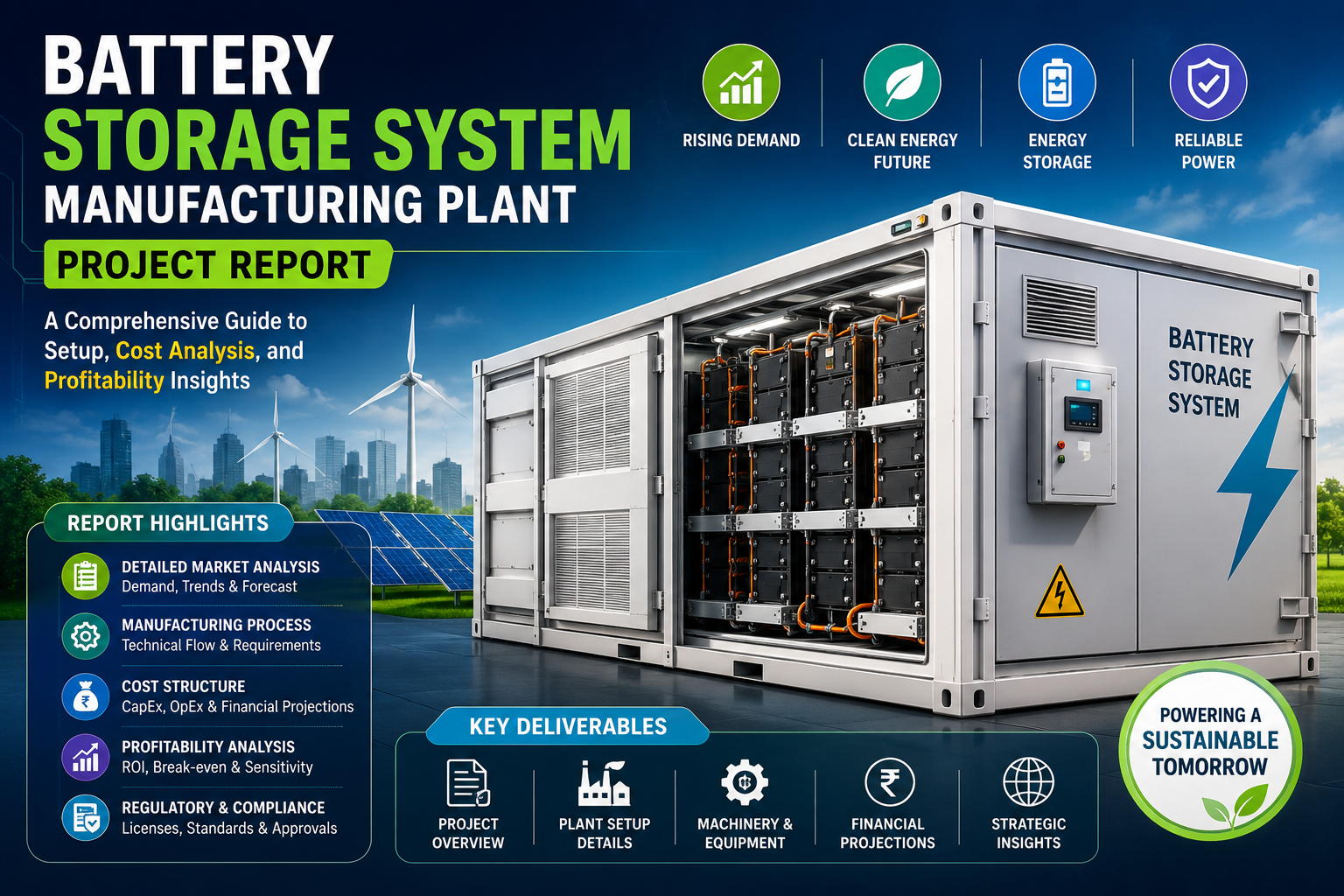
A Detailed DPR Covering CapEx, OpEx, Cell-to-System Assembly Process, ROI, Global Opportunity in Grid-Scale, Commercial, and Industrial Battery Storage system
BROOKLYN, NY, UNITED STATES, May 19, 2026 /EINPresswire.com/ -- Setting up a battery energy storage system manufacturing plant positions you at the intersection of two megatrends: the global renewable energy transition and the electrification of industrial and commercial power infrastructure. Battery energy storage systems are no longer supplementary to grid design - they are structurally required. Solar and wind energy are intermittent by nature; storage is what converts variable generation into dispatchable, round-the-clock power. Governments, utilities, and industrial operators worldwide are deploying BESS at a pace that cell production capacity is struggling to match. India’s 25% CAGR in the battery energy storage market - the highest of any major economy - makes domestic BESS manufacturing one of the most policy-aligned BESS plant investment opportunities in the energy sector.IMARC Group’s Battery Energy Storage System Manufacturing Plant Project Report is a complete DPR and battery energy storage manufacturing feasibility study for energy investors, electronics manufacturers, and project developers. It covers the full BESS manufacturing plant setup - from cell intake and testing through module assembly, rack integration, Power Conversion System installation, Energy Management System configuration, and Factory Acceptance Testing - with complete BESS plant CapEx and OpEx modelling and 10-year financial projections.
𝐑𝐞𝐪𝐮𝐞𝐬𝐭 𝐟𝐨𝐫 𝐚 𝐒𝐚𝐦𝐩𝐥𝐞 𝐑𝐞𝐩𝐨𝐫𝐭: https://www.imarcgroup.com/battery-storage-system-manufacturing-plant-project-report
𝐈𝐧𝐯𝐞𝐬𝐭𝐦𝐞𝐧𝐭 𝐃𝐫𝐢𝐯𝐞𝐫𝐬 𝐚𝐧𝐝 𝐌𝐚𝐫𝐤𝐞𝐭 𝐎𝐩𝐩𝐨𝐫𝐭𝐮𝐧𝐢𝐭𝐲
Three forces are simultaneously driving BESS manufacturing investment globally and in India:
𝐑𝐞𝐧𝐞𝐰𝐚𝐛𝐥𝐞 𝐞𝐧𝐞𝐫𝐠𝐲 𝐦𝐚𝐧𝐝𝐚𝐭𝐞𝐬 𝐜𝐫𝐞𝐚𝐭𝐢𝐧𝐠 𝐧𝐨𝐧-𝐝𝐢𝐬𝐜𝐫𝐞𝐭𝐢𝐨𝐧𝐚𝐫𝐲 𝐬𝐭𝐨𝐫𝐚𝐠𝐞 𝐝𝐞𝐦𝐚𝐧𝐝: India’s National Electricity Plan mandates storage requirements escalating from 82.37 GWh in 2026-27 to 411.4 GWh by 2031-32, and 2,380 GWh by 2047. The Energy Storage Obligation requires utilities to reach 4% of electricity demand in storage by 2030. As of early 2026, 92 GWh of BESS projects are in the active pipeline, with 69 new tenders totalling 102 GWh floated in the past twelve months. Grid-scale installed capacity is projected to jump from 507 MWh in 2025 to 5 GWh by end of 2026.
𝐆𝐨𝐯𝐞𝐫𝐧𝐦𝐞𝐧𝐭 𝐢𝐧𝐜𝐞𝐧𝐭𝐢𝐯𝐞𝐬 𝐜𝐫𝐞𝐚𝐭𝐢𝐧𝐠 𝐚 𝐟𝐮𝐧𝐝𝐞𝐝 𝐦𝐚𝐧𝐮𝐟𝐚𝐜𝐭𝐮𝐫𝐢𝐧𝐠 𝐞𝐜𝐨𝐬𝐲𝐬𝐭𝐞𝐦: India’s PLI for Advanced Chemistry Cell batteries commits Rs.18,100 crore to support 50 GWh of domestic capacity. Viability Gap Funding of Rs.91 billion subsidises BESS deployment, expanding the addressable market for manufacturers. ISTS charge waivers for co-located storage projects commissioned by June 2028 improve project economics. The 2026 Union Budget introduced customs duty exemptions for lithium-ion BESS manufacturing plant inputs.
𝐅𝐚𝐥𝐥𝐢𝐧𝐠 𝐜𝐞𝐥𝐥 𝐜𝐨𝐬𝐭𝐬 𝐦𝐚𝐤𝐢𝐧𝐠 𝐁𝐄𝐒𝐒 𝐞𝐜𝐨𝐧𝐨𝐦𝐢𝐜𝐬 𝐢𝐧𝐜𝐫𝐞𝐚𝐬𝐢𝐧𝐠𝐥𝐲 𝐜𝐨𝐦𝐩𝐞𝐭𝐢𝐭𝐢𝐯𝐞: Grid-scale auction tariffs in India fell 65% between 2022 and 2024, reflecting global LFP cell price deflation. LFP (Lithium Iron Phosphate) chemistry dominates Indian deployments due to superior thermal safety and long cycle life at high temperatures. As cell costs decline, the integration and BMS layer of a battery energy storage production plant becomes proportionally more valuable.
𝐁𝐄𝐒𝐒 𝐏𝐫𝐨𝐝𝐮𝐜𝐭 𝐓𝐲𝐩𝐞𝐬 𝐚𝐧𝐝 𝐀𝐩𝐩𝐥𝐢𝐜𝐚𝐭𝐢𝐨𝐧 𝐑𝐚𝐧𝐠𝐞
A BESS manufacturing plant’s product range spans several system configurations, each targeting a distinct customer segment:
• 𝐔𝐭𝐢𝐥𝐢𝐭𝐲-𝐬𝐜𝐚𝐥𝐞 𝐠𝐫𝐢𝐝 𝐁𝐄𝐒𝐒 (𝟏𝟎𝟎 𝐌𝐖𝐡-𝐆𝐖𝐡+): Containerised systems for DISCOMs, NTPC, SECI, and IPPs for frequency regulation and renewable firming. Adani’s 1,126 MW/3,530 MWh Khavda project (November 2025) will be among the world’s largest single-location BESS. A grid scale battery storage manufacturing plant targeting this segment accesses the largest volume procurement channel.
• 𝐂𝐨𝐦𝐦𝐞𝐫𝐜𝐢𝐚𝐥 𝐚𝐧𝐝 𝐢𝐧𝐝𝐮𝐬𝐭𝐫𝐢𝐚𝐥 𝐁𝐄𝐒𝐒 (𝟓𝟎𝟎 𝐤𝐖𝐡-𝟏𝟎 𝐌𝐖𝐡): For factories, data centres, and hospitals for peak shaving, backup power, and renewable self-consumption. Cummins India launched its modular LFP-based BESS in Pune in June 2025.
• 𝐓𝐞𝐥𝐞𝐜𝐨𝐦 𝐭𝐨𝐰𝐞𝐫 𝐁𝐄𝐒𝐒 (𝟓𝟎-𝟓𝟎𝟎 𝐤𝐖𝐡): Replacing diesel generators at telecom towers. India has 700,000+ towers with diesel backup, representing a large and distributed replacement market. Amara Raja’s Giga Corridor in Telangana specifically targets telecom and data centre storage.
• 𝐑𝐞𝐧𝐞𝐰𝐚𝐛𝐥𝐞 𝐞𝐧𝐞𝐫𝐠𝐲 𝐜𝐨-𝐥𝐨𝐜𝐚𝐭𝐞𝐝 𝐁𝐄𝐒𝐒: AC or DC-coupled storage with solar and wind plants for round-the-clock power contracts. ISTS charge waivers make co-located configurations commercially superior for new project bids.
• 𝐌𝐢𝐜𝐫𝐨𝐠𝐫𝐢𝐝 𝐚𝐧𝐝 𝐨𝐟𝐟-𝐠𝐫𝐢𝐝 𝐁𝐄𝐒𝐒: Complete power systems for remote mining, agricultural, and rural electrification applications. Higher margin per kWh due to diesel displacement value and service intensity. Growing segment as India electrifies its last-mile infrastructure.
𝐁𝐚𝐭𝐭𝐞𝐫𝐲 𝐄𝐧𝐞𝐫𝐠𝐲 𝐒𝐭𝐨𝐫𝐚𝐠𝐞 𝐒𝐲𝐬𝐭𝐞𝐦 𝐌𝐚𝐧𝐮𝐟𝐚𝐜𝐭𝐮𝐫𝐢𝐧𝐠 𝐏𝐥𝐚𝐧𝐭 𝐅𝐞𝐚𝐬𝐢𝐛𝐢𝐥𝐢𝐭𝐲 𝐑𝐞𝐩𝐨𝐫𝐭: https://www.imarcgroup.com/battery-storage-system-manufacturing-plant-project-report
𝐇𝐨𝐰 𝐚 𝐁𝐚𝐭𝐭𝐞𝐫𝐲 𝐄𝐧𝐞𝐫𝐠𝐲 𝐒𝐭𝐨𝐫𝐚𝐠𝐞 𝐒𝐲𝐬𝐭𝐞𝐦 𝐌𝐚𝐧𝐮𝐟𝐚𝐜𝐭𝐮𝐫𝐢𝐧𝐠 𝐏𝐥𝐚𝐧𝐭 𝐖𝐨𝐫𝐤𝐬 - 𝐓𝐡𝐞 𝐂𝐞𝐥𝐥-𝐭𝐨-𝐒𝐲𝐬𝐭𝐞𝐦 𝐀𝐬𝐬𝐞𝐦𝐛𝐥𝐲 𝐏𝐫𝐨𝐜𝐞𝐬𝐬
BESS manufacturing is a precision electronics assembly and systems integration process. Unlike cell manufacturing, which is capital-intensive and chemistry-specific, BESS assembly is flexible and upgradeable as cell technology evolves:
• 𝐂𝐞𝐥𝐥 𝐢𝐧𝐜𝐨𝐦𝐢𝐧𝐠 𝐢𝐧𝐬𝐩𝐞𝐜𝐭𝐢𝐨𝐧 𝐚𝐧𝐝 𝐞𝐥𝐞𝐜𝐭𝐫𝐢𝐜𝐚𝐥 𝐭𝐞𝐬𝐭𝐢𝐧𝐠: Li-ion cells (LFP or NMC, cylindrical, prismatic, or pouch format) are received and tested for open circuit voltage, internal resistance, and capacity. Cells that fail specification are segregated. Cell quality at intake directly determines battery storage manufacturing unit cost, system lifetime, and warranty performance
• 𝐂𝐞𝐥𝐥 𝐦𝐚𝐭𝐜𝐡𝐢𝐧𝐠 𝐚𝐧𝐝 𝐠𝐫𝐨𝐮𝐩𝐢𝐧𝐠: Cells are sorted by capacity, internal resistance, and voltage characteristics into matched groups. Consistent cell pairing within a module minimises capacity imbalance and extends cycle life. This step is critical for the BMS to manage cells at uniform state-of-charge
• 𝐌𝐨𝐝𝐮𝐥𝐞 𝐚𝐬𝐬𝐞𝐦𝐛𝐥𝐲: Matched cells are assembled into battery modules with cell interconnect busbars, temperature sensors, and the module-level BMS daughter board. Module assembly requires controlled environment (temperature, humidity) to prevent cell contamination and electrolyte exposure
• 𝐌𝐨𝐝𝐮𝐥𝐞 𝐭𝐞𝐬𝐭𝐢𝐧𝐠: Each module undergoes charge-discharge cycling, capacity verification, and thermal profiling before rack assembly
• 𝐑𝐚𝐜𝐤 𝐚𝐬𝐬𝐞𝐦𝐛𝐥𝐲: Modules are installed into battery racks with the master BMS, inter-module busbars, fusing, and communication harness. Rack mechanical assembly must meet IP and vibration standards for the target installation environment
• 𝐂𝐨𝐧𝐭𝐚𝐢𝐧𝐞𝐫 𝐨𝐫 𝐞𝐧𝐜𝐥𝐨𝐬𝐮𝐫𝐞 𝐢𝐧𝐭𝐞𝐠𝐫𝐚𝐭𝐢𝐨𝐧: Racks are installed into steel containers or purpose-built enclosures with the Power Conversion System (PCS), Energy Management System (EMS), Thermal Management System (TMS/HVAC), and fire detection and suppression. Container-level DC and AC wiring, communication integration, and safety system connection are completed
• 𝐒𝐲𝐬𝐭𝐞𝐦-𝐥𝐞𝐯𝐞𝐥 𝐭𝐞𝐬𝐭𝐢𝐧𝐠 𝐚𝐧𝐝 𝐄𝐌𝐒 𝐜𝐨𝐧𝐟𝐢𝐠𝐮𝐫𝐚𝐭𝐢𝐨𝐧: Full system charge-discharge test, BMS communication verification, EMS dispatch strategy programming, grid interconnection simulation, and fault injection testing. Round-trip efficiency, response time, and state-of-health baselines are established
• 𝐅𝐚𝐜𝐭𝐨𝐫𝐲 𝐀𝐜𝐜𝐞𝐩𝐭𝐚𝐧𝐜𝐞 𝐓𝐞𝐬𝐭𝐢𝐧𝐠 (𝐅𝐀𝐓): Customer witness testing covers full operational range, alarm and protection response, communication protocol compliance, and safety system activation. FAT sign-off triggers final packaging and logistics planning for site delivery
𝐏𝐥𝐚𝐧𝐭 𝐈𝐧𝐯𝐞𝐬𝐭𝐦𝐞𝐧𝐭 𝐄𝐜𝐨𝐧𝐨𝐦𝐢𝐜𝐬
𝐏𝐫𝐨𝐝𝐮𝐜𝐭𝐢𝐨𝐧 𝐂𝐚𝐩𝐚𝐜𝐢𝐭𝐲:
• The proposed manufacturing facility is designed with an annual production capacity ranging between 1 - 2 GWh, enabling economies of scale while maintaining operational flexibility
𝐏𝐫𝐨𝐟𝐢𝐭𝐚𝐛𝐢𝐥𝐢𝐭𝐲 𝐁𝐞𝐧𝐜𝐡𝐦𝐚𝐫𝐤𝐬:
• 𝐆𝐫𝐨𝐬𝐬 𝐏𝐫𝐨𝐟𝐢𝐭: 20-30%
• 𝐍𝐞𝐭 𝐏𝐫𝐨𝐟𝐢𝐭: 12-18% after financing costs, depreciation, and taxes
𝐎𝐩𝐞𝐫𝐚𝐭𝐢𝐧𝐠 𝐂𝐨𝐬𝐭 (𝐎𝐩𝐄𝐱) 𝐁𝐫𝐞𝐚𝐤𝐝𝐨𝐰𝐧:
• 𝐑𝐚𝐰 𝐌𝐚𝐭𝐞𝐫𝐢𝐚𝐥𝐬 (𝐋𝐢-𝐢𝐨𝐧 𝐛𝐚𝐭𝐭𝐞𝐫𝐲 𝐜𝐞𝐥𝐥𝐬 𝐚𝐧𝐝 𝐩𝐚𝐜𝐤𝐬): 80-85% of total OpEx - cell cost is the dominant variable in BESS manufacturing unit economics
• 𝐔𝐭𝐢𝐥𝐢𝐭𝐢𝐞𝐬: 5-10% of OpEx - assembly and testing, not energy-intensive process manufacturing
𝐁𝐄𝐒𝐒 𝐏𝐥𝐚𝐧𝐭 𝐂𝐚𝐩𝐄𝐱 𝐂𝐨𝐦𝐩𝐨𝐧𝐞𝐧𝐭𝐬:
• 𝐋𝐚𝐧𝐝 𝐚𝐧𝐝 𝐟𝐚𝐜𝐭𝐨𝐫𝐲: cleanroom assembly hall, testing chamber, container integration bay, warehouse for cell inventory and finished systems
• 𝐂𝐨𝐫𝐞 𝐚𝐬𝐬𝐞𝐦𝐛𝐥𝐲 𝐞𝐪𝐮𝐢𝐩𝐦𝐞𝐧𝐭: cell testing and sorting stations, module assembly jigs and torque tools, automated busbar welding, rack assembly fixtures, EMS configuration and testing computers
• 𝐓𝐞𝐬𝐭𝐢𝐧𝐠 𝐢𝐧𝐟𝐫𝐚𝐬𝐭𝐫𝐮𝐜𝐭𝐮𝐫𝐞: charge-discharge cycling equipment, thermal chamber, vibration test rig, high-voltage safety test equipment, grid simulator for system-level FAT
• 𝐌𝐚𝐭𝐞𝐫𝐢𝐚𝐥 𝐡𝐚𝐧𝐝𝐥𝐢𝐧𝐠: cell receiving and kitting conveyor, module and rack handling equipment, container loading crane or forklift infrastructure
• 𝐏𝐫𝐞-𝐨𝐩𝐞𝐫𝐚𝐭𝐢𝐯𝐞 𝐜𝐨𝐬𝐭𝐬: IEC 62619 and IEC 62933 certification, UL 9540 (US export), BIS registration, cell supply agreements, EMS software licensing, and initial cell inventory
𝐒𝐩𝐞𝐚𝐤 𝐭𝐨 𝐀𝐧𝐚𝐥𝐲𝐬𝐭 𝐟𝐨𝐫 𝐂𝐮𝐬𝐭𝐨𝐦𝐢𝐳𝐞𝐝 𝐑𝐞𝐩𝐨𝐫𝐭: https://www.imarcgroup.com/request?type=report&id=11912&flag=C
𝐆𝐥𝐨𝐛𝐚𝐥 𝐌𝐚𝐫𝐤𝐞𝐭 𝐚𝐧𝐝 𝐑𝐞𝐠𝐢𝐨𝐧𝐚𝐥 𝐃𝐞𝐦𝐚𝐧𝐝
The global battery energy storage system market reached 273.22 GW in 2025 and is projected to reach 513.82 GW by 2034 at a CAGR of 7.3%. Asia Pacific leads global deployment, driven by China, India, Japan, South Korea, and Australia.
𝐈𝐧𝐝𝐢𝐚: The India battery energy storage systems market reached USD 327.7 million in 2025 and is projected to reach USD 2,683.0 million by 2034 at a CAGR of 25.00%. Key investments include Waaree Energies’ 16 GWh integrated Li-ion gigafactory in Andhra Pradesh (February 2026, INR 8,175 crore), Exide Energy Solutions’ 12 GWh cell manufacturing facility (Phase 1 expected FY25-26), and Amara Raja’s Giga Corridor in Telangana. NTPC’s Ramagundam 33 MW/132 MWh project is India’s largest operational BESS as of mid-2025. Rajasthan, Gujarat, and Maharashtra lead the state-level BESS deployment pipeline.
𝐂𝐡𝐢𝐧𝐚: Dominates global BESS production through CATL, BYD Energy Storage, Sungrow, and Huawei. China’s domestic grid storage deployment is the largest in the world. Chinese manufacturers supply the majority of cells used in global BESS projects, including India. In December 2025, China established a CNY 3 billion polysilicon consolidation platform, reflecting its strategy of managing domestic capacity across the clean energy supply chain.
𝐔𝐧𝐢𝐭𝐞𝐝 𝐒𝐭𝐚𝐭𝐞𝐬: IRA Section 45X manufacturing credits are driving domestic BESS investment. AES, Fluence, Tesla Megapack, and Powin are active grid-scale integrators, with deployments accelerating across California, Texas, and the Northeast.
𝐄𝐮𝐫𝐨𝐩𝐞: EU Net Zero Industry Act targets are driving deployment across the UK, Germany, and Ireland. C&I BESS for demand charge management is growing rapidly alongside grid-scale renewable firming projects.
𝐀𝐮𝐬𝐭𝐫𝐚𝐥𝐢𝐚: One of the highest per-capita BESS deployment rates globally. South Australia’s Hornsdale Power Reserve demonstrated large-scale BESS viability. Rooftop solar penetration is driving household and C&I storage adoption at scale.
𝐒𝐢𝐭𝐞 𝐒𝐞𝐥𝐞𝐜𝐭𝐢𝐨𝐧 𝐚𝐧𝐝 𝐏𝐨𝐥𝐢𝐜𝐲 𝐒𝐮𝐩𝐩𝐨𝐫𝐭
Location decisions for a BESS manufacturing plant setup are primarily driven by cell supply chain access and customer proximity:
• 𝐂𝐞𝐥𝐥 𝐬𝐮𝐩𝐩𝐥𝐲 𝐜𝐡𝐚𝐢𝐧 𝐩𝐫𝐨𝐱𝐢𝐦𝐢𝐭𝐲: Li-ion cells account for 80-85% of raw material cost. Proximity to domestic cell gigafactories - Waaree in Andhra Pradesh, Exide in Bengaluru, Amara Raja in Telangana - reduces procurement lead time and logistics cost as Indian domestic cell production scales up. Until domestic cell supply matures, bonded warehouse and port access for cell imports is a key site requirement
• 𝐏𝐫𝐨𝐱𝐢𝐦𝐢𝐭𝐲 𝐭𝐨 𝐫𝐞𝐧𝐞𝐰𝐚𝐛𝐥𝐞 𝐞𝐧𝐞𝐫𝐠𝐲 𝐜𝐥𝐮𝐬𝐭𝐞𝐫𝐬: The largest BESS buyers are utility-scale solar and wind developers in Rajasthan, Gujarat, Tamil Nadu, and Andhra Pradesh. A plant within 500-1,000 km of these deployment clusters reduces project logistics cost and enables faster site commissioning support
• 𝐄𝐥𝐞𝐜𝐭𝐫𝐨𝐧𝐢𝐜𝐬 𝐦𝐚𝐧𝐮𝐟𝐚𝐜𝐭𝐮𝐫𝐢𝐧𝐠 𝐢𝐧𝐟𝐫𝐚𝐬𝐭𝐫𝐮𝐜𝐭𝐮𝐫𝐞: BESS assembly requires EMS and BMS software configuration expertise, power electronics integration, and cleanroom-standard assembly areas. Electronics manufacturing parks in Tamil Nadu, Karnataka, and Telangana provide talent, infrastructure, and supply chain co-location for power electronics components
• 𝐆𝐨𝐯𝐞𝐫𝐧𝐦𝐞𝐧𝐭 𝐢𝐧𝐜𝐞𝐧𝐭𝐢𝐯𝐞𝐬: India - PLI ACC scheme (Rs.18,100 crore for 50 GWh), VGF scheme for BESS deployment projects, ISTS charge waivers, 2026 Union Budget customs duty exemptions for BESS manufacturing inputs, state industrial subsidies in Gujarat, Andhra Pradesh, and Telangana. US - IRA Section 45X. EU - Net Zero Industry Act
• 𝐄𝐱𝐩𝐨𝐫𝐭 𝐚𝐜𝐜𝐞𝐬𝐬: BESS systems are containerised and heavy. Plants near major seaports - Mundra, Chennai, Visakhapatnam, Nhava Sheva - access export markets in Southeast Asia, the Middle East, and Africa where BESS demand is growing alongside renewable energy buildout
𝐑𝐞𝐩𝐨𝐫𝐭 𝐂𝐨𝐯𝐞𝐫𝐚𝐠𝐞
IMARC Group’s BESS Plant Project Report is a complete battery storage manufacturing business plan and technical reference:
• 𝐅𝐮𝐥𝐥 𝐚𝐬𝐬𝐞𝐦𝐛𝐥𝐲 𝐩𝐫𝐨𝐜𝐞𝐬𝐬 𝐟𝐥𝐨𝐰: from cell intake through module, rack, container integration, EMS configuration, and FAT
• 𝐁𝐄𝐒𝐒 𝐩𝐥𝐚𝐧𝐭 𝐂𝐚𝐩𝐄𝐱 𝐛𝐫𝐞𝐚𝐤𝐝𝐨𝐰𝐧: assembly equipment, testing infrastructure, material handling, cleanroom construction
• 𝟏𝟎-𝐲𝐞𝐚𝐫 𝐎𝐩𝐄𝐱 𝐩𝐫𝐨𝐣𝐞𝐜𝐭𝐢𝐨𝐧𝐬: BESS plant OpEx covering cell procurement, BMS and EMS software, utilities, labour, and maintenance
• 𝐅𝐢𝐧𝐚𝐧𝐜𝐢𝐚𝐥 𝐦𝐨𝐝𝐞𝐥: BESS plant ROI, IRR, NPV, DSCR, break-even, and sensitivity tables across cell cost and system pricing scenarios
• 𝐂𝐞𝐥𝐥 𝐜𝐡𝐞𝐦𝐢𝐬𝐭𝐫𝐲 𝐬𝐭𝐫𝐚𝐭𝐞𝐠𝐲: LFP versus NMC comparison - thermal safety, cycle life, energy density, and cost profile for Indian climate conditions
• 𝐏𝐫𝐨𝐝𝐮𝐜𝐭 𝐦𝐢𝐱 𝐬𝐭𝐫𝐚𝐭𝐞𝐠𝐲: utility-scale versus C&I versus telecom - margin, customer type, and procurement channel comparison for a lithium-ion BESS manufacturing plant
• 𝐁𝐄𝐒𝐒 𝐩𝐥𝐚𝐧𝐭 𝐬𝐞𝐭𝐮𝐩 𝐜𝐨𝐬𝐭 𝐛𝐞𝐧𝐜𝐡𝐦𝐚𝐫𝐤𝐢𝐧𝐠: across 1 GWh and 2 GWh annual capacity configurations
• 𝐑𝐞𝐠𝐮𝐥𝐚𝐭𝐨𝐫𝐲 𝐜𝐨𝐦𝐩𝐥𝐢𝐚𝐧𝐜𝐞: IEC 62619, IEC 62933, BIS IS 16270, PESO battery storage regulations, CEA BESS grid interconnection standards
The battery storage plant project report is built for energy and electronics investors evaluating a BESS manufacturing plant investment, renewable energy developers considering backward integration into storage manufacturing, and banks requiring a bankable battery energy storage manufacturing feasibility study for project financing.
𝐁𝐫𝐨𝐰𝐬𝐞 𝐌𝐨𝐫𝐞 𝐅𝐞𝐚𝐬𝐢𝐛𝐢𝐥𝐢𝐭𝐲 𝐒𝐭𝐮𝐝𝐲 𝐚𝐧𝐝 𝐁𝐮𝐬𝐢𝐧𝐞𝐬𝐬 𝐏𝐥𝐚𝐧 𝐑𝐞𝐩𝐨𝐫𝐭𝐬 𝐛𝐲 𝐈𝐌𝐀𝐑𝐂 𝐆𝐫𝐨𝐮𝐩:
• 𝐒𝐢𝐥𝐢𝐜𝐨𝐧 𝐖𝐚𝐟𝐞𝐫 𝐌𝐚𝐧𝐮𝐟𝐚𝐜𝐭𝐮𝐫𝐢𝐧𝐠 𝐏𝐥𝐚𝐧𝐭 𝐏𝐫𝐨𝐣𝐞𝐜𝐭 𝐑𝐞𝐩𝐨𝐫𝐭: https://www.imarcgroup.com/silicon-wafer-manufacturing-plant-project-report
• 𝐒𝐦𝐚𝐫𝐭 𝐓𝐕 𝐌𝐚𝐧𝐮𝐟𝐚𝐜𝐭𝐮𝐫𝐢𝐧𝐠 𝐏𝐥𝐚𝐧𝐭 𝐏𝐫𝐨𝐣𝐞𝐜𝐭 𝐑𝐞𝐩𝐨𝐫𝐭: https://www.imarcgroup.com/smart-tv-manufacturing-plant-project-report
• 𝐒𝐨𝐝𝐢𝐮𝐦-𝐢𝐨𝐧 𝐁𝐚𝐭𝐭𝐞𝐫𝐲 𝐌𝐚𝐧𝐮𝐟𝐚𝐜𝐭𝐮𝐫𝐢𝐧𝐠 𝐏𝐥𝐚𝐧𝐭 𝐏𝐫𝐨𝐣𝐞𝐜𝐭 𝐑𝐞𝐩𝐨𝐫𝐭: https://www.imarcgroup.com/sodium-ion-battery-manufacturing-plant-project-report
• 𝐒𝐨𝐥𝐚𝐫 𝐂𝐞𝐥𝐥 𝐌𝐚𝐧𝐮𝐟𝐚𝐜𝐭𝐮𝐫𝐢𝐧𝐠 𝐏𝐥𝐚𝐧𝐭 𝐏𝐫𝐨𝐣𝐞𝐜𝐭 𝐑𝐞𝐩𝐨𝐫𝐭: https://www.imarcgroup.com/solar-cell-manufacturing-plant-project-report
• 𝐏𝐨𝐭𝐚𝐭𝐨 𝐒𝐭𝐚𝐫𝐜𝐡 𝐌𝐚𝐧𝐮𝐟𝐚𝐜𝐭𝐮𝐫𝐢𝐧𝐠 𝐏𝐥𝐚𝐧𝐭 𝐏𝐫𝐨𝐣𝐞𝐜𝐭 𝐑𝐞𝐩𝐨𝐫𝐭: https://www.imarcgroup.com/potato-starch-manufacturing-plant-project-report
• 𝐌𝐢𝐧𝐞𝐫𝐚𝐥 𝐖𝐚𝐭𝐞𝐫 𝐏𝐫𝐨𝐜𝐞𝐬𝐬𝐢𝐧𝐠 𝐏𝐥𝐚𝐧𝐭 𝐏𝐫𝐨𝐣𝐞𝐜𝐭 𝐑𝐞𝐩𝐨𝐫𝐭: https://www.imarcgroup.com/mineral-water-processing-plant-project-report
• 𝐌𝐨𝐛𝐢𝐥𝐞 𝐀𝐜𝐜𝐞𝐬𝐬𝐨𝐫𝐢𝐞𝐬 𝐌𝐚𝐧𝐮𝐟𝐚𝐜𝐭𝐮𝐫𝐢𝐧𝐠 𝐏𝐥𝐚𝐧𝐭 𝐏𝐫𝐨𝐣𝐞𝐜𝐭 𝐑𝐞𝐩𝐨𝐫𝐭: https://www.imarcgroup.com/mobile-accessories-manufacturing-plant-project-report
• 𝐍𝐢𝐭𝐫𝐢𝐜 𝐀𝐜𝐢𝐝 𝐏𝐫𝐨𝐝𝐮𝐜𝐭𝐢𝐨𝐧 𝐏𝐥𝐚𝐧𝐭 𝐏𝐫𝐨𝐣𝐞𝐜𝐭 𝐑𝐞𝐩𝐨𝐫𝐭: https://www.imarcgroup.com/nitric-acid-manufacturing-plant-project-report
• 𝐄𝐥𝐞𝐜𝐭𝐫𝐢𝐜 𝐁𝐮𝐬 𝐌𝐚𝐧𝐮𝐟𝐚𝐜𝐭𝐮𝐫𝐢𝐧𝐠 𝐏𝐥𝐚𝐧𝐭 𝐏𝐫𝐨𝐣𝐞𝐜𝐭 𝐑𝐞𝐩𝐨𝐫𝐭: https://www.imarcgroup.com/electric-bus-manufacturing-plant-project-report
• 𝐅𝐢𝐛𝐞𝐫 𝐎𝐩𝐭𝐢𝐜 𝐂𝐚𝐛𝐥𝐞 𝐌𝐚𝐧𝐮𝐟𝐚𝐜𝐭𝐮𝐫𝐢𝐧𝐠 𝐏𝐥𝐚𝐧𝐭 𝐏𝐫𝐨𝐣𝐞𝐜𝐭 𝐑𝐞𝐩𝐨𝐫𝐭: https://www.imarcgroup.com/fiber-optic-cable-manufacturing-plant-project-report
𝐀𝐛𝐨𝐮𝐭 𝐈𝐌𝐀𝐑𝐂 𝐆𝐫𝐨𝐮𝐩
IMARC Group is a global market research and management consulting firm. Its plant setup and DPR practice serves investors, developers, government agencies, and banks across 50+ countries, delivering reports used for loan documentation, investment approvals, and engineering planning.
Elena Anderson
IMARC Services Private Limited
+ +1 201-971-6302
email us here
Legal Disclaimer:
EIN Presswire provides this news content "as is" without warranty of any kind. We do not accept any responsibility or liability for the accuracy, content, images, videos, licenses, completeness, legality, or reliability of the information contained in this article. If you have any complaints or copyright issues related to this article, kindly contact the author above.
