

Your daily news update on Asia and the Pacific
Provided by AGP
Tyre Pyrolysis Plant Setup, Feasibility Study, ROI Analysis and Business Plan Consultant
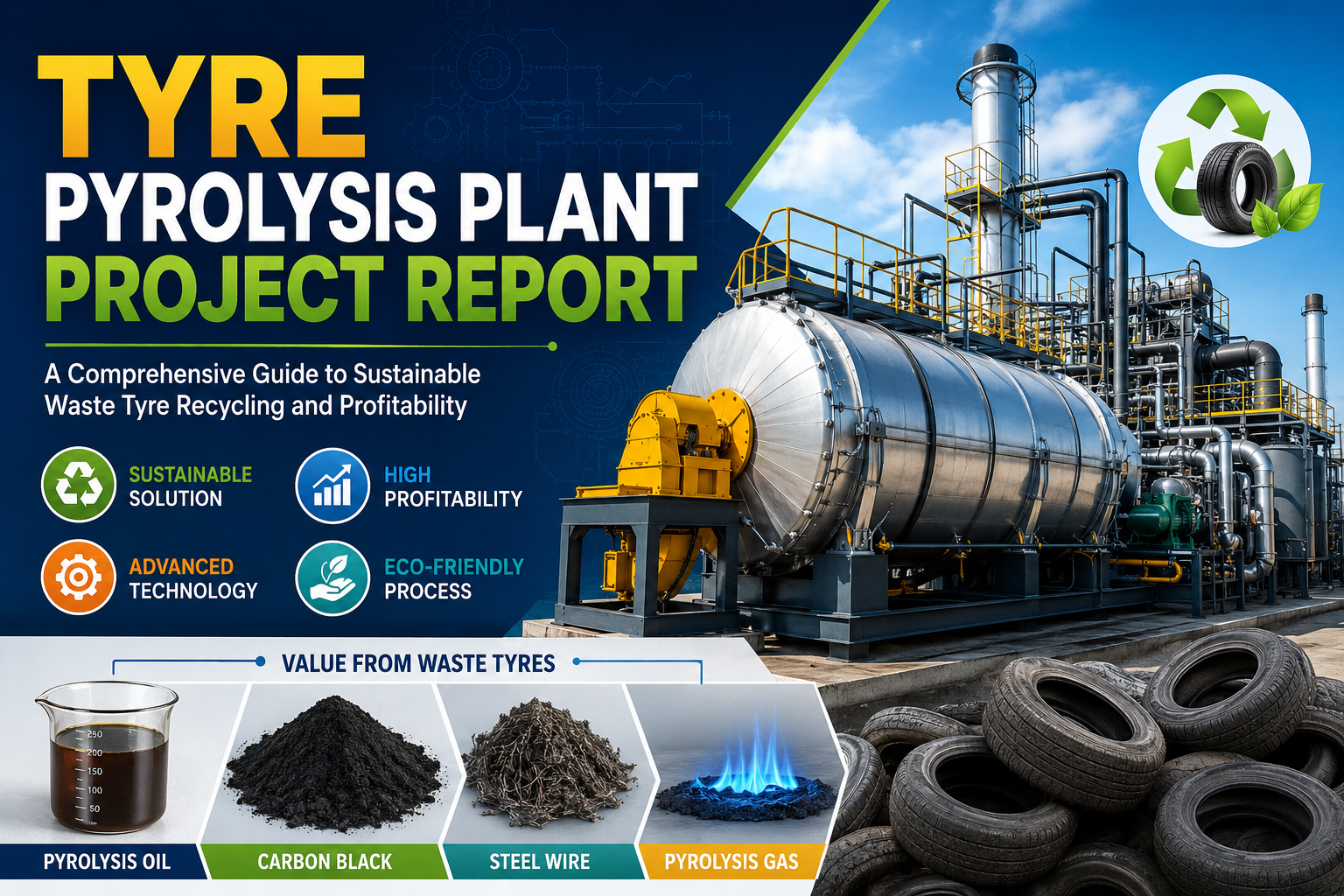
A Detailed DPR Covering CapEx/OpEx, Thermal Pyrolysis Process, Multi-Product Economics, ROI and the Global Opportunity in Pyrolysis Oil, Recovered Carbon Black
BROOKLYN, NY, UNITED STATES, May 19, 2026 /EINPresswire.com/ -- Setting up a tyre pyrolysis plant converts an environmental liability into a three-revenue-stream industrial operation. Waste tyres are generated in enormous and growing volumes globally with nowhere viable to go — landfilling is restricted, open burning is prohibited, and stockpiles pose fire and public health risks. Pyrolysis thermally decomposes waste tyres in an oxygen-free environment to yield tyre pyrolysis oil (TPO), recovered carbon black (rCB), reusable steel wire, and syngas. Each output has a defined commercial market, and the syngas self-fuels the reactor — reducing energy costs. India’s waste tyre pyrolysis plant investment opportunity is strengthened by the EPR (Extended Producer Responsibility) framework, which obligates tyre producers to finance waste tyre collection and processing, providing certified pyrolysis operators with a structured supply chain.IMARC Group’s Tyre Pyrolysis Plant Project Report is a complete DPR and tyre pyrolysis feasibility study for waste management investors and circular economy entrepreneurs. It covers the full tyre pyrolysis plant setup — a waste tyre pyrolysis plant setup — from tyre shredding and pre-treatment through pyrolysis reactor operation, vapour condensation, carbon black processing, and steel separation — with complete tyre pyrolysis plant CapEx and OpEx modelling and 10-year financial projections.
𝐑𝐞𝐪𝐮𝐞𝐬𝐭 𝐟𝐨𝐫 𝐚 𝐒𝐚𝐦𝐩𝐥𝐞 𝐑𝐞𝐩𝐨𝐫𝐭: https://www.imarcgroup.com/tyre-pyrolysis-manufacturing-plant-project-report/requestsample
𝐈𝐧𝐯𝐞𝐬𝐭𝐦𝐞𝐧𝐭 𝐃𝐫𝐢𝐯𝐞𝐫𝐬 𝐚𝐧𝐝 𝐌𝐚𝐫𝐤𝐞𝐭 𝐎𝐩𝐩𝐨𝐫𝐭𝐮𝐧𝐢𝐭𝐲
Three forces are converging to make tyre pyrolysis a commercially viable and policy-supported investment:
𝐄𝐏𝐑 𝐟𝐫𝐚𝐦𝐞𝐰𝐨𝐫𝐤 𝐜𝐫𝐞𝐚𝐭𝐢𝐧𝐠 𝐚 𝐫𝐞𝐠𝐮𝐥𝐚𝐭𝐞𝐝 𝐰𝐚𝐬𝐭𝐞 𝐭𝐲𝐫𝐞 𝐬𝐮𝐩𝐩𝐥𝐲 𝐚𝐧𝐝 𝐫𝐞𝐯𝐞𝐧𝐮𝐞 𝐦𝐞𝐜𝐡𝐚𝐧𝐢𝐬𝐦: India’s EPR policy for waste tyres (notified July 2022 under Hazardous Waste Rules) mandates that tyre producers and importers take responsibility for end-of-life tyre collection and processing. EPR obligations scaled from 35% in 2022–23 to 100% by 2024–25. Tyre producers fulfil these obligations by purchasing EPR certificates from registered pyrolysis and recycling operators. This creates a commercial revenue mechanism — beyond product sales — for compliant pyrolysis operators. India recycled approximately 3 million MT of tyres in FY2024–25, with pyrolysis accounting for 2.68 MMT of that volume.
𝐆𝐫𝐨𝐰𝐢𝐧𝐠 𝐝𝐞𝐦𝐚𝐧𝐝 𝐟𝐨𝐫 𝐩𝐲𝐫𝐨𝐥𝐲𝐬𝐢𝐬 𝐨𝐢𝐥 𝐚𝐬 𝐚𝐧 𝐢𝐧𝐝𝐮𝐬𝐭𝐫𝐢𝐚𝐥 𝐟𝐮𝐞𝐥 𝐚𝐥𝐭𝐞𝐫𝐧𝐚𝐭𝐢𝐯𝐞: Tyre pyrolysis oil (TPO) is a viable substitute for furnace oil in cement kilns, industrial boilers, and power generation. As conventional fuel prices rise and refineries explore circular feedstocks, demand for TPO is expanding. NITI Aayog’s May 2026 national conference on waste tyre management proposed allowing TPO from imported tyre-derived feedstock for use in refineries — a significant policy upgrade that would further expand the domestic TPO market.
𝐑𝐞𝐜𝐨𝐯𝐞𝐫𝐞𝐝 𝐜𝐚𝐫𝐛𝐨𝐧 𝐛𝐥𝐚𝐜𝐤 𝐞𝐧𝐭𝐞𝐫𝐢𝐧𝐠 𝐠𝐥𝐨𝐛𝐚𝐥 𝐬𝐮𝐩𝐩𝐥𝐲 𝐜𝐡𝐚𝐢𝐧𝐬: Recovered carbon black (rCB) from tyre pyrolysis has historically been used as a low-grade filler in rubber and road construction. Advances in post-processing technology — thermal or chemical upgrading — are improving rCB quality to ASTM N300–N500 grade specifications, making it suitable for tyre manufacturing and specialty rubber applications. Global demand for rCB as a sustainable replacement for virgin carbon black is growing alongside circular economy mandates. NITI Aayog has proposed national quality standards and a separate HSN code for rCB to formalise the market.
𝐏𝐫𝐨𝐝𝐮𝐜𝐭 𝐑𝐚𝐧𝐠𝐞 𝐚𝐧𝐝 𝐑𝐞𝐯𝐞𝐧𝐮𝐞 𝐒𝐭𝐫𝐞𝐚𝐦𝐬
A tyre pyrolysis production plant generates four co-products from each tonne of waste tyre processed:
• 𝐓𝐲𝐫𝐞 𝐩𝐲𝐫𝐨𝐥𝐲𝐬𝐢𝐬 𝐨𝐢𝐥 (𝐓𝐏𝐎) — 35–45% 𝐲𝐢𝐞𝐥𝐝: The primary revenue product. Used as fuel in cement kilns, ceramic kilns, industrial furnaces, and marine vessels. A pyrolysis oil manufacturing plant targeting cement and ceramics clusters has consistent, large-volume offtake. Calorific value of 9,000–10,500 kcal/kg — comparable to light furnace oil.
• 𝐑𝐞𝐜𝐨𝐯𝐞𝐫𝐞𝐝 𝐜𝐚𝐫𝐛𝐨𝐧 𝐛𝐥𝐚𝐜𝐤 (𝐫𝐂𝐁) — 30–35% 𝐲𝐢𝐞𝐥𝐝: Black powder residue from the pyrolysis reactor. Used in rubber compounding, plastic masterbatch, pigments, and road construction. Higher grades suitable for tyre production after thermal upgrading. A recovered carbon black plant adds significant value over raw carbon char through grinding, pelletising, and quality certification.
• 𝐒𝐭𝐞𝐞𝐥 𝐰𝐢𝐫𝐞 — 10–15% 𝐲𝐢𝐞𝐥𝐝: Separated from the carbon residue by magnetic separation. Sold directly to steel scrap dealers or rolling mills. Minimal processing required. Low-margin but 100% recoverable revenue contribution.
• 𝐒𝐲𝐧𝐠𝐚𝐬 — 10–15% 𝐲𝐢𝐞𝐥𝐝: Non-condensable gas produced during pyrolysis. Calorific value of 3,500–4,500 kcal/Nm³. Used to self-fuel the pyrolysis reactor, reducing external fuel consumption and tyre pyrolysis plant OpEx by 20–30%.
𝐓𝐲𝐫𝐞 𝐏𝐲𝐫𝐨𝐥𝐲𝐬𝐢𝐬 𝐏𝐥𝐚𝐧𝐭 𝐅𝐞𝐚𝐬𝐢𝐛𝐢𝐥𝐢𝐭𝐲 𝐑𝐞𝐩𝐨𝐫𝐭: https://www.imarcgroup.com/tyre-pyrolysis-manufacturing-plant-project-report
𝐇𝐨𝐰 𝐚 𝐓𝐲𝐫𝐞 𝐏𝐲𝐫𝐨𝐥𝐲𝐬𝐢𝐬 𝐏𝐥𝐚𝐧𝐭 𝐖𝐨𝐫𝐤𝐬 — 𝐓𝐡𝐞 𝐓𝐡𝐞𝐫𝐦𝐚𝐥 𝐏𝐲𝐫𝐨𝐥𝐲𝐬𝐢𝐬 𝐏𝐫𝐨𝐜𝐞𝐬𝐬
Tyre pyrolysis is a thermochemical decomposition process conducted in an oxygen-free reactor environment. Two main configurations exist: batch/advanced batch, and continuous. Gujarat Pollution Control Board approved continuous pyrolysis plants in India, signalling the regulatory direction:
• 𝐖𝐚𝐬𝐭𝐞 𝐭𝐲𝐫𝐞 𝐜𝐨𝐥𝐥𝐞𝐜𝐭𝐢𝐨𝐧 𝐚𝐧𝐝 𝐬𝐨𝐫𝐭𝐢𝐧𝐠: Passenger car, truck, and OTR (off-the-road) tyres are collected through EPR-registered collection channels. Tyre type and size determine shredder configuration and expected product yields. Consistent feedstock is critical for stable reactor operation
• 𝐒𝐡𝐫𝐞𝐝𝐝𝐢𝐧𝐠 𝐚𝐧𝐝 𝐩𝐫𝐞-𝐭𝐫𝐞𝐚𝐭𝐦𝐞𝐧𝐭: Whole tyres are shredded into chips (50–150 mm) or crumbs (2–25 mm) for continuous systems. Steel wire may be partially removed by magnetic separation at this stage. Pre-treatment reduces reactor loading time and improves heat transfer efficiency
• 𝐑𝐞𝐚𝐜𝐭𝐨𝐫 𝐥𝐨𝐚𝐝𝐢𝐧𝐠 𝐚𝐧𝐝 𝐩𝐲𝐫𝐨𝐥𝐲𝐬𝐢𝐬: Shredded tyres are loaded into the pyrolysis reactor (rotary kiln, fixed batch vessel, or continuous screw reactor). The reactor is heated to 400–600°C under nitrogen or syngas blanket in the absence of oxygen. Tyre rubber thermally cracks into vapour, liquid, solid char, and gas fractions over 45–240 minutes depending on reactor design
• 𝐕𝐚𝐩𝐨𝐮𝐫 𝐜𝐨𝐧𝐝𝐞𝐧𝐬𝐚𝐭𝐢𝐨𝐧 𝐚𝐧𝐝 𝐨𝐢𝐥 𝐫𝐞𝐜𝐨𝐯𝐞𝐫𝐲: Hot pyrolysis vapours exit the reactor and pass through a condenser system (spray condenser or shell-and-tube heat exchanger). The vapours cool and condense into liquid TPO collected in storage tanks. Non-condensable syngas exits the condenser and is piped back to the reactor burner
• 𝐂𝐚𝐫𝐛𝐨𝐧 𝐛𝐥𝐚𝐜𝐤 𝐜𝐨𝐥𝐥𝐞𝐜𝐭𝐢𝐨𝐧 𝐚𝐧𝐝 𝐩𝐨𝐬𝐭-𝐩𝐫𝐨𝐜𝐞𝐬𝐬𝐢𝐧𝐠: Solid carbon char residue remains in the reactor after each cycle. It is removed by auger or pneumatic conveyor, cooled, and processed through a ball mill or raymond mill for size reduction. Magnetic separation removes residual steel. The resulting rCB is tested for iodine number, DBPA, and mesh residue for quality classification
• 𝐒𝐭𝐞𝐞𝐥 𝐰𝐢𝐫𝐞 𝐬𝐞𝐩𝐚𝐫𝐚𝐭𝐢𝐨𝐧 𝐚𝐧𝐝 𝐛𝐚𝐥𝐢𝐧𝐠: Steel separated from the carbon residue is collected, baled, and sold to scrap dealers. In pre-shredding with magnetic separation, steel wire may be baled before the reactor cycle
• 𝐎𝐢𝐥 𝐩𝐮𝐫𝐢𝐟𝐢𝐜𝐚𝐭𝐢𝐨𝐧 𝐚𝐧𝐝 𝐬𝐭𝐨𝐫𝐚𝐠𝐞: Raw TPO is settled and filtered to remove suspended carbon and water. Distillation can further fractionate TPO into diesel-range and light fuel fractions. Purified oil is stored in bunded steel tanks and dispatched to industrial fuel buyers
𝐏𝐥𝐚𝐧𝐭 𝐈𝐧𝐯𝐞𝐬𝐭𝐦𝐞𝐧𝐭 𝐄𝐜𝐨𝐧𝐨𝐦𝐢𝐜𝐬
𝐏𝐫𝐨𝐝𝐮𝐜𝐭𝐢𝐨𝐧 𝐂𝐚𝐩𝐚𝐜𝐢𝐭𝐲:
• The proposed facility is designed with an annual production capacity ranging between 20,000–50,000 MT of waste tyre input, enabling economies of scale while maintaining operational flexibility
𝐏𝐫𝐨𝐟𝐢𝐭𝐚𝐛𝐢𝐥𝐢𝐭𝐲 𝐁𝐞𝐧𝐜𝐡𝐦𝐚𝐫𝐤𝐬:
• Gross Profit: 35–45%
• Net Profit: 15–20% after financing costs, depreciation, and taxes
𝐎𝐩𝐞𝐫𝐚𝐭𝐢𝐧𝐠 𝐂𝐨𝐬𝐭 (𝐎𝐩𝐄𝐱) 𝐁𝐫𝐞𝐚𝐤𝐝𝐨𝐰𝐧:
• Raw Materials (waste tyres): 30–40% of total OpEx — significantly lower than most manufacturing sectors due to the low or zero cost of waste tyre feedstock; EPR certificate income partially offsets this
• Utilities: 20–25% of OpEx — reactor heating and condensation are the primary energy consumers; syngas self-fuelling reduces external fuel dependency
𝐓𝐲𝐫𝐞 𝐏𝐲𝐫𝐨𝐥𝐲𝐬𝐢𝐬 𝐏𝐥𝐚𝐧𝐭 𝐂𝐚𝐩𝐄𝐱 𝐂𝐨𝐦𝐩𝐨𝐧𝐞𝐧𝐭𝐬:
• 𝐋𝐚𝐧𝐝 𝐚𝐧𝐝 𝐢𝐧𝐟𝐫𝐚𝐬𝐭𝐫𝐮𝐜𝐭𝐮𝐫𝐞: tyre storage yard (covered), shredder bay, reactor building, condensation and oil storage area, carbon black processing unit, steel separation and baling area
• 𝐂𝐨𝐫𝐞 𝐩𝐫𝐨𝐜𝐞𝐬𝐬 𝐞𝐪𝐮𝐢𝐩𝐦𝐞𝐧𝐭: tyre shredder, pyrolysis reactor (batch, advanced batch automated, or continuous), condenser and oil collection system, syngas handling and burner system, rotary cooler for carbon char
• 𝐂𝐚𝐫𝐛𝐨𝐧 𝐛𝐥𝐚𝐜𝐤 𝐩𝐨𝐬𝐭-𝐩𝐫𝐨𝐜𝐞𝐬𝐬𝐢𝐧𝐠: ball mill or raymond mill, magnetic separator, pelletiser or bagging system for rCB
• 𝐏𝐨𝐥𝐥𝐮𝐭𝐢𝐨𝐧 𝐜𝐨𝐧𝐭𝐫𝐨𝐥: combustion chamber for syngas, venturi scrubber and wet electrostatic precipitator for stack emissions, effluent treatment system
• 𝐏𝐫𝐞-𝐨𝐩𝐞𝐫𝐚𝐭𝐢𝐯𝐞 𝐜𝐨𝐬𝐭𝐬: CPCB EPR registration, SPCB Consent to Operate, Hazardous Waste Authorisation, fire NOC; tyre pyrolysis plant setup cost includes pre-operative compliance expenses and initial tyre supply agreements.
𝐀𝐬𝐤 𝐀𝐧𝐚𝐥𝐲𝐬𝐭 𝐟𝐨𝐫 𝐂𝐮𝐬𝐭𝐨𝐦𝐢𝐳𝐚𝐭𝐢𝐨𝐧: https://www.imarcgroup.com/request?type=report&id=19444&flag=C
𝐆𝐥𝐨𝐛𝐚𝐥 𝐌𝐚𝐫𝐤𝐞𝐭 𝐚𝐧𝐝 𝐑𝐞𝐠𝐢𝐨𝐧𝐚𝐥 𝐃𝐞𝐦𝐚𝐧𝐝
The global tyre pyrolysis oil market, valued at USD 383.32 million in 2025, is projected to reach USD 622.75 million by 2034 at a CAGR of 5.5%. Asia Pacific leads both tyre waste generation and pyrolysis capacity, with India being the fastest-growing market.
𝐈𝐧𝐝𝐢𝐚: India processes approximately 3 million MT of waste tyres annually, with pyrolysis accounting for 2.68 MMT in FY2024–25. The Gujarat Pollution Control Board approved continuous pyrolysis plants, establishing the regulatory pathway for formal large-scale operations. NITI Aayog’s May 2026 conference proposed national quality standards for TPO and rCB, a separate HSN code, and GST rationalisation to formalise the market and improve producer economics. The government is also exploring import permissions for waste tyres to augment domestic feedstock supply.
𝐄𝐮𝐫𝐨𝐩𝐞: The EU Circular Economy Action Plan mandates progressive end-of-life tyre recycling targets and rCB reuse in new tyre manufacturing. Bridgestone Corporation began commercial TPO and rCB production in 2023. Contec S.A. commissioned its 3rd and 4th pyrolysis plants (November 2024). Emissions standards and quality frameworks in Europe are setting the benchmark that India’s policy proposals are now following.
𝐔𝐧𝐢𝐭𝐞𝐝 𝐒𝐭𝐚𝐭𝐞𝐬: Growing demand for alternative industrial fuels and sustainability compliance is expanding the TPO market. Liberty Tyre Recycling launched the first nationwide bicycle tyre recycling programme in December 2024. IRA circular economy incentives are supporting tyre-derived fuel and rCB investment.
𝐂𝐡𝐢𝐧𝐚 𝐚𝐧𝐝 𝐒𝐨𝐮𝐭𝐡𝐞𝐚𝐬𝐭 𝐀𝐬𝐢𝐚: China has the world’s largest tyre pyrolysis sector, though dominated by unregulated small-scale operators. Regulatory formalisation is consolidating the sector toward larger, emission-compliant plants. Southeast Asian markets are following similar trajectories.
𝐒𝐢𝐭𝐞 𝐒𝐞𝐥𝐞𝐜𝐭𝐢𝐨𝐧 𝐚𝐧𝐝 𝐏𝐨𝐥𝐢𝐜𝐲 𝐒𝐮𝐩𝐩𝐨𝐫𝐭
Location decisions for a tyre pyrolysis plant setup directly affect feedstock availability, emission compliance, and product market access:
• 𝐏𝐫𝐨𝐱𝐢𝐦𝐢𝐭𝐲 𝐭𝐨 𝐭𝐲𝐫𝐞 𝐰𝐚𝐬𝐭𝐞 𝐜𝐨𝐥𝐥𝐞𝐜𝐭𝐢𝐨𝐧 𝐩𝐨𝐢𝐧𝐭𝐬: Waste tyres are bulky and expensive to transport per unit of feedstock value. Proximity to dense tyre generation zones — auto workshops, fleet operators, tyre retreading clusters, and urban scrap markets — reduces collection logistics cost. Industrial states with dense vehicle populations (Maharashtra, Gujarat, UP, Tamil Nadu, Rajasthan) offer the best tyre collection density
• 𝐈𝐧𝐝𝐮𝐬𝐭𝐫𝐢𝐚𝐥 𝐳𝐨𝐧𝐞 𝐜𝐥𝐞𝐚𝐫𝐚𝐧𝐜𝐞: Tyre pyrolysis is classified as a hazardous waste processing activity under CPCB rules. Plants must be located in industrial zones designated for hazardous waste processing, with minimum setback distances from residential areas. Industrial estates with existing SPCB-approved hazardous waste infrastructure reduce environmental clearance timeline
• 𝐅𝐮𝐞𝐥 𝐚𝐧𝐝 𝐫𝐂𝐁 𝐦𝐚𝐫𝐤𝐞𝐭 𝐩𝐫𝐨𝐱𝐢𝐦𝐢𝐭𝐲: TPO buyers — cement plants, ceramics units, industrial boilers — are geographically concentrated. A tyre pyrolysis production plant located within 100–300 km of a cement cluster or ceramics belt maximises TPO logistics economics. rCB buyers in rubber and plastic compounding are similarly geographically clustered
• 𝐆𝐨𝐯𝐞𝐫𝐧𝐦𝐞𝐧𝐭 𝐬𝐮𝐩𝐩𝐨𝐫𝐭: India — EPR certificate income as a supplementary revenue stream, PMEGP and CGTMSE loan support for MSME-scale pyrolysis units, potential GST rationalisation on rCB and TPO under NITI Aayog proposals, state hazardous waste processing incentives
𝐑𝐞𝐩𝐨𝐫𝐭 𝐂𝐨𝐯𝐞𝐫𝐚𝐠𝐞
IMARC Group’s Tyre Pyrolysis Plant Project Report is a complete tyre pyrolysis business plan and technical reference:
• 𝐅𝐮𝐥𝐥 𝐩𝐫𝐨𝐜𝐞𝐬𝐬 𝐟𝐥𝐨𝐰 𝐰𝐢𝐭𝐡 𝐦𝐚𝐬𝐬 𝐛𝐚𝐥𝐚𝐧𝐜𝐞: from tyre shredding through pyrolysis reactor, condensation, carbon black processing, steel separation, and dispatch
• 𝐓𝐲𝐫𝐞 𝐩𝐲𝐫𝐨𝐥𝐲𝐬𝐢𝐬 𝐩𝐥𝐚𝐧𝐭 𝐂𝐚𝐩𝐄𝐱 𝐛𝐫𝐞𝐚𝐤𝐝𝐨𝐰𝐧: reactor, shredder, condenser, carbon processing, pollution control equipment
• 10-𝐲𝐞𝐚𝐫 𝐎𝐩𝐄𝐱 𝐩𝐫𝐨𝐣𝐞𝐜𝐭𝐢𝐨𝐧𝐬: tyre pyrolysis plant OpEx covering feedstock, utilities, labour, emission compliance, and maintenance
• 𝐅𝐢𝐧𝐚𝐧𝐜𝐢𝐚𝐥 𝐦𝐨𝐝𝐞𝐥: tyre pyrolysis plant ROI, IRR, NPV, DSCR, break-even, and sensitivity tables across feedstock cost and TPO pricing scenarios
• 𝐓𝐞𝐜𝐡𝐧𝐨𝐥𝐨𝐠𝐲 𝐬𝐞𝐥𝐞𝐜𝐭𝐢𝐨𝐧: batch versus advanced batch automated versus continuous reactor — CapEx, compliance, throughput, and product quality comparison for a waste tyre recycling plant
• 𝐌𝐮𝐥𝐭𝐢-𝐩𝐫𝐨𝐝𝐮𝐜𝐭 𝐫𝐞𝐯𝐞𝐧𝐮𝐞 𝐦𝐨𝐝𝐞𝐥: TPO, rCB, steel, EPR certificates — blended margin and pricing scenario analysis
• 𝐓𝐲𝐫𝐞 𝐩𝐲𝐫𝐨𝐥𝐲𝐬𝐢𝐬 𝐮𝐧𝐢𝐭 𝐜𝐨𝐬𝐭 𝐛𝐞𝐧𝐜𝐡𝐦𝐚𝐫𝐤𝐢𝐧𝐠: across 20,000 and 50,000 MT/year input configurations
• 𝐑𝐞𝐠𝐮𝐥𝐚𝐭𝐨𝐫𝐲 𝐜𝐨𝐦𝐩𝐥𝐢𝐚𝐧𝐜𝐞: CPCB SOP 2024, Hazardous Waste Rules authorisation, EPR registration, SPCB Consent to Operate, emission monitoring requirements
The report is built for circular economy investors evaluating a tyre pyrolysis plant investment, industrial fuel distributors considering backward integration, and banks requiring a bankable tyre pyrolysis feasibility study for project financing.
𝐁𝐫𝐨𝐰𝐬𝐞 𝐌𝐨𝐫𝐞 𝐅𝐞𝐚𝐬𝐢𝐛𝐢𝐥𝐢𝐭𝐲 𝐒𝐭𝐮𝐝𝐲 𝐚𝐧𝐝 𝐁𝐮𝐬𝐢𝐧𝐞𝐬𝐬 𝐏𝐥𝐚𝐧 𝐑𝐞𝐩𝐨𝐫𝐭𝐬 𝐛𝐲 𝐈𝐌𝐀𝐑𝐂 𝐆𝐫𝐨𝐮𝐩:
• 𝐂𝐞𝐦𝐞𝐧𝐭 𝐌𝐚𝐧𝐮𝐟𝐚𝐜𝐭𝐮𝐫𝐢𝐧𝐠 𝐏𝐥𝐚𝐧𝐭 𝐏𝐫𝐨𝐣𝐞𝐜𝐭 𝐑𝐞𝐩𝐨𝐫𝐭: https://www.imarcgroup.com/cement-manufacturing-plant-project-report
• 𝐂𝐢𝐠𝐚𝐫𝐞𝐭𝐭𝐞 𝐋𝐢𝐠𝐡𝐭𝐞𝐫 𝐌𝐚𝐧𝐮𝐟𝐚𝐜𝐭𝐮𝐫𝐢𝐧𝐠 𝐏𝐥𝐚𝐧𝐭 𝐏𝐫𝐨𝐣𝐞𝐜𝐭 𝐑𝐞𝐩𝐨𝐫𝐭: https://www.imarcgroup.com/cigarette-lighter-manufacturing-plant-project-report
• 𝐂𝐨𝐧𝐝𝐨𝐦 𝐌𝐚𝐧𝐮𝐟𝐚𝐜𝐭𝐮𝐫𝐢𝐧𝐠 𝐏𝐥𝐚𝐧𝐭 𝐏𝐫𝐨𝐣𝐞𝐜𝐭 𝐑𝐞𝐩𝐨𝐫𝐭: https://www.imarcgroup.com/condom-manufacturing-plant-project-report
• 𝐁𝐚𝐭𝐭𝐞𝐫𝐲 𝐑𝐞𝐜𝐲𝐜𝐥𝐢𝐧𝐠 𝐏𝐥𝐚𝐧𝐭 𝐏𝐫𝐨𝐣𝐞𝐜𝐭 𝐑𝐞𝐩𝐨𝐫𝐭: https://www.imarcgroup.com/battery-recycling-plant-project-report
• 𝐁𝐢𝐨𝐝𝐢𝐞𝐬𝐞𝐥 𝐌𝐚𝐧𝐮𝐟𝐚𝐜𝐭𝐮𝐫𝐢𝐧𝐠 𝐏𝐥𝐚𝐧𝐭 𝐏𝐫𝐨𝐣𝐞𝐜𝐭 𝐑𝐞𝐩𝐨𝐫𝐭: https://www.imarcgroup.com/biodiesel-manufacturing-plant-project-report
• 𝐂𝐚𝐛𝐥𝐞𝐬 𝐌𝐚𝐧𝐮𝐟𝐚𝐜𝐭𝐮𝐫𝐢𝐧𝐠 𝐏𝐥𝐚𝐧𝐭 𝐏𝐫𝐨𝐣𝐞𝐜𝐭 𝐑𝐞𝐩𝐨𝐫𝐭: https://www.imarcgroup.com/cables-manufacturing-plant-project-report
• 𝐀𝐢𝐫 𝐂𝐨𝐧𝐝𝐢𝐭𝐢𝐨𝐧𝐞𝐫 𝐌𝐚𝐧𝐮𝐟𝐚𝐜𝐭𝐮𝐫𝐢𝐧𝐠 𝐏𝐥𝐚𝐧𝐭 𝐏𝐫𝐨𝐣𝐞𝐜𝐭 𝐑𝐞𝐩𝐨𝐫𝐭: https://www.imarcgroup.com/air-conditioner-manufacturing-plant-project-report
• 𝐀𝐥𝐮𝐦𝐢𝐧𝐢𝐮𝐦 𝐂𝐚𝐧𝐬 𝐌𝐚𝐧𝐮𝐟𝐚𝐜𝐭𝐮𝐫𝐢𝐧𝐠 𝐏𝐥𝐚𝐧𝐭 𝐏𝐫𝐨𝐣𝐞𝐜𝐭 𝐑𝐞𝐩𝐨𝐫𝐭: https://www.imarcgroup.com/aluminium-cans-manufacturing-plant-project-report
𝐀𝐛𝐨𝐮𝐭 𝐈𝐌𝐀𝐑𝐂 𝐆𝐫𝐨𝐮𝐩
IMARC Group is a global market research and management consulting firm. Its plant setup and DPR practice serves investors, developers, government agencies, and banks across 50+ countries, delivering reports used for loan documentation, investment approvals, and engineering planning.
Elena Anderson
IMARC Services Private Limited
+1 201-971-6302
email us here
Legal Disclaimer:
EIN Presswire provides this news content "as is" without warranty of any kind. We do not accept any responsibility or liability for the accuracy, content, images, videos, licenses, completeness, legality, or reliability of the information contained in this article. If you have any complaints or copyright issues related to this article, kindly contact the author above.
